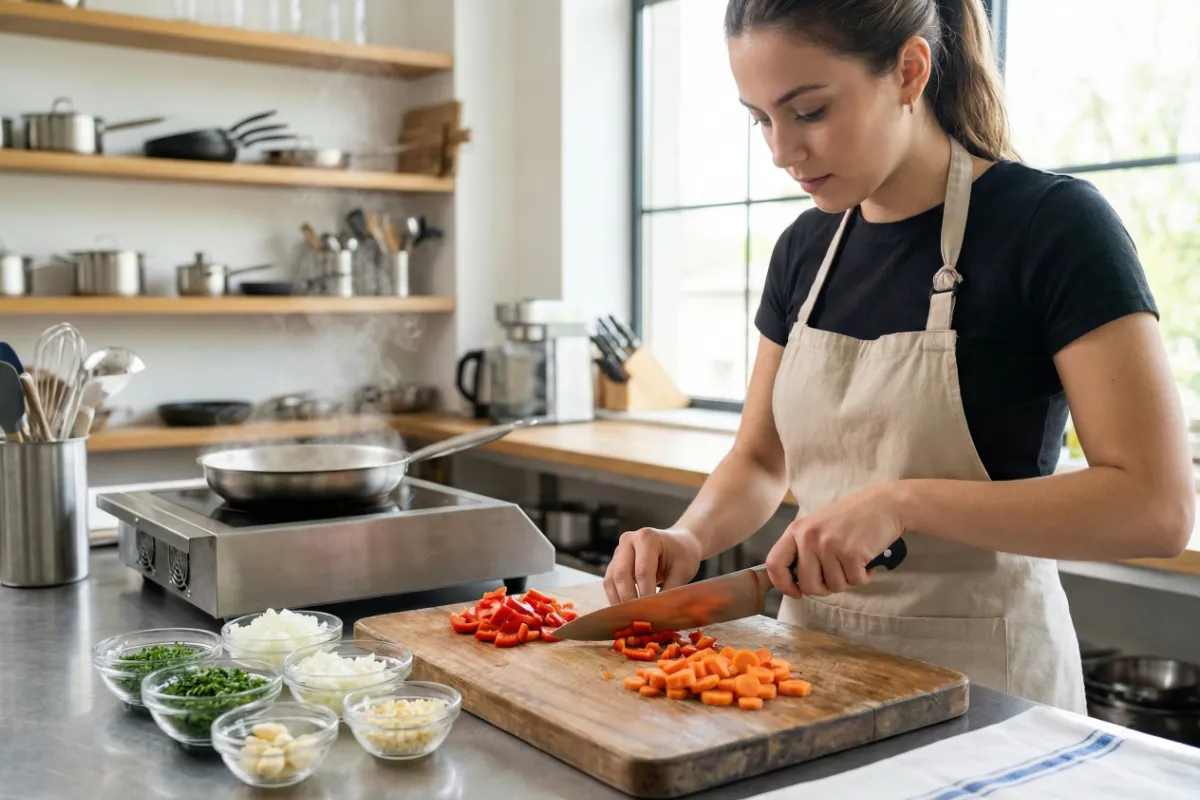
Most home cooks never learn proper knife control, heat management, or organized prep. That’s a staggering gap. The reality is, without these beginner chef skills, even the best recipes won’t turn out right.
That’s where building the fundamentals comes in. It helps develop your confidence in the kitchen, your speed, and your ability to execute any dish. This approach lays a cooking foundation that positions you to handle any recipe with ease.
In this guide, you’ll learn practical cooking techniques that chefs use every day. We’ll explore why these fundamentals count and the specific strategies you can use to improve your cooking.
Stick with us to find out everything about the specific strategies that make every recipe easier to execute.
Kitchen Skill Building: Where Every Beginner Chef Starts
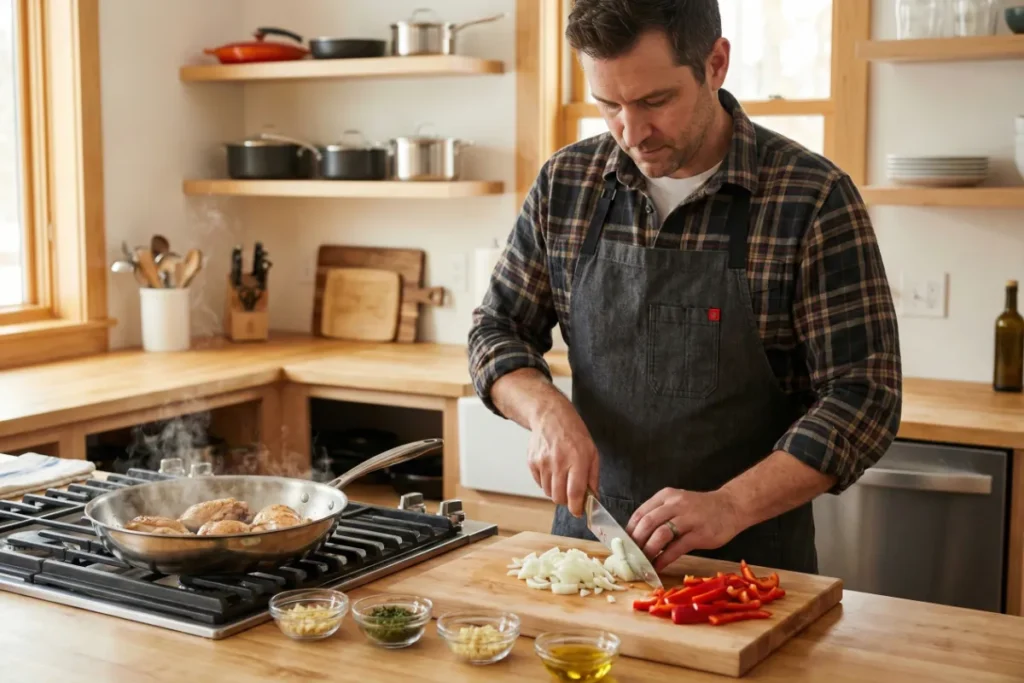
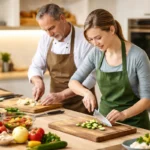
Kitchen skill building starts with three cooking fundamentals: knife work, heat control, and organized prep. These areas separate confident cooks from people who freeze up every time they start cooking a recipe. Building that confidence begins with how your knife feels in your hand.
So let’s break down knife work first.
Your Knife Becomes an Extension of Your Hand
When your knife becomes an extension of your hand, you feel each cut because your muscles remember the pattern. This turns knife skills automatic during cooking.
That muscle memory starts with a proper grip: hold the chef’s knife with your thumb and forefinger, gripping the base. Your fingers wrap the handle for cutting board stability when chopping vegetables or using a paring knife.
Once your grip feels natural, practice rocking motion to increase speed. As you rock, keep the blade down for better control, which leads to even cuts that cook consistently across any recipe.
Heat Control Separates Good Cooks from Great Ones
The reason comes down to heat control, which changes how meat browns, vegetables caramelize, and sauces reduce. But here’s what separates them: a good cook adjusts constantly, while most people set it once and walk away.
Those adjustments start with your burner’s three settings, and each level serves a different purpose. Specifically, low heat simmers in a pan without burning, medium cooks vegetables or roasts meat evenly, and high heat sears chicken for crisp skin in a frying pan.
After understanding these heat levels, matching the right one to your dish determines whether food cooks properly. For example, chicken needs high heat while sauces need gentle cooking to prevent scorched garlic, and those differences only become manageable when prep keeps everything flowing smoothly.
Prep Work Makes Everything Else Flow Smoothly
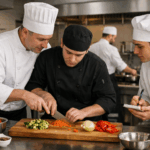
Mise en place saves you from hunting for ingredients while your garlic burns. This food prep method means having everything from your recipe measured, chopped, and ready before you start cooking.
Professional kitchens use this mise en place because the cooking process moves too fast to chop vegetables mid-recipe. When everything sits within reach, following any recipe becomes methodical.
Without this prep work, dishes overcook while you scramble for missing items. Once mise en place becomes automatic, other cooking fundamentals start making more sense.
What Cooking Fundamentals Should You Focus On?
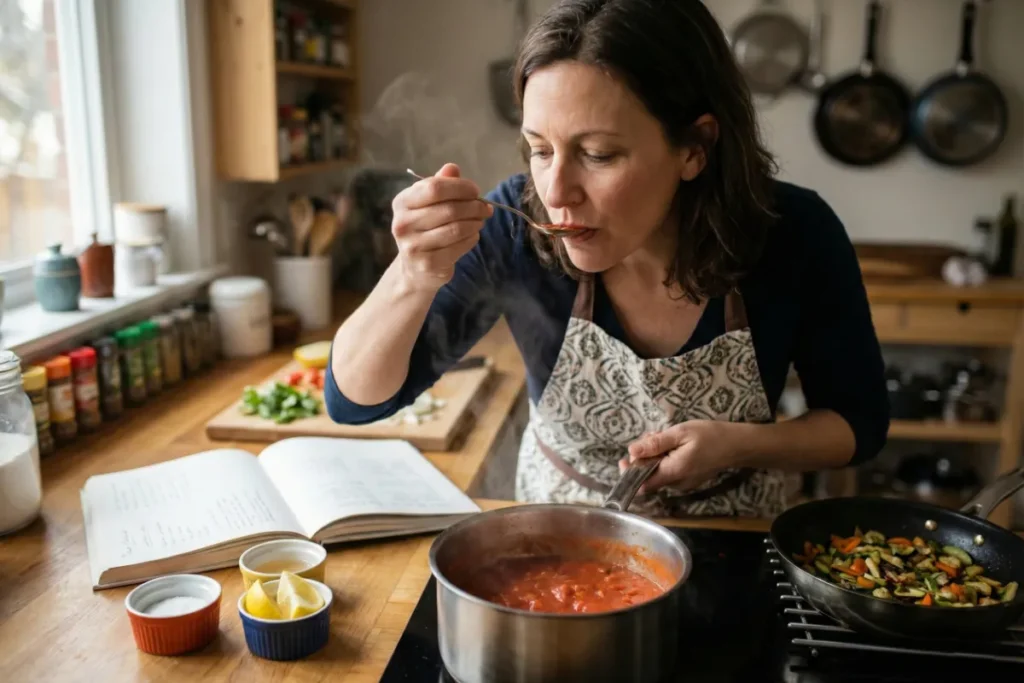
The cooking fundamentals you need most are tasting as you go, reading recipes correctly, and timing dishes. Get these three right, and your food comes out consistent instead of falling apart mid-cook.
We’ll start with the one that catches mistakes before they reach the table.
Tasting as You Go Builds Better Flavor
Tasting as you go develops better flavor because it catches problems early before they reach the table. This approach means sampling your food at multiple stages to adjust salt and acid throughout cooking.
For salt, add it gradually in small pinches and sample between additions until the dish feels balanced. Sometimes flat flavors need acid from lemon juice or vinegar when salt won’t help. That’s the salt, fat, acid, heat principle chefs follow in recipes.
Developing this balancing act takes repetition. The more you sample and adjust, the faster you’ll recognize when flavors need salt versus acid.
Reading Recipes the Right Way Saves Time
Most kitchen disasters happen because people skim recipes and start cooking immediately. You realize mid-cook that you needed room temperature eggs, softened butter, or a preheated pan ready. These missed recipe details derail your timing completely.
The solution is reading a recipe twice and scanning for specific requirements like ingredient temperatures and equipment needs. Missing these details buried in recipe instructions adds unnecessary time to every meal you prepare and forces you to pause mid-cook.
When you catch everything upfront, the actual cooking becomes smooth without hunting for ingredients while your pan overheats.
Timing Multiple Dishes Takes Practice
Getting everything to finish at the same time challenges even experienced home cooks. Your protein needs 20 minutes while vegetables finish in 8, which means starting everything together leaves half your meal cold.
Here’s how professionals avoid cold plates. They work backwards from serving time, calculate when each dish finishes, then stagger start times so everything hits the plate hot.
The best way to build this skill is starting with one dish at a time. When timing becomes automatic with simple recipes, you’ll coordinate multi-recipe meals without anything sitting.
Beginner Chef Skills: The Ones You’ll Use Every Single Day
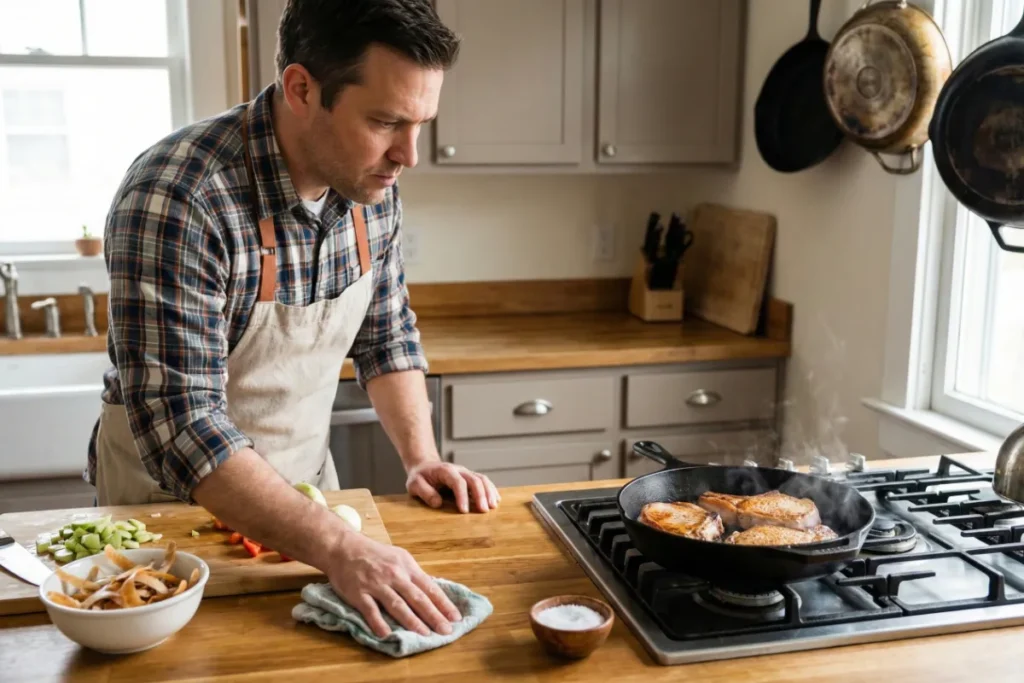
The skills you’ll use every single day are keeping your station clean, adjusting seasoning confidently, and using simple techniques over fancy equipment. These beginner chef skills convert kitchen chaos into controlled execution because they apply to every recipe you follow.
That execution starts with your workspace.
Keep Your Station Clean While You Cook
Keeping your station clean while you cook prevents cross-contamination and speeds up your cooking process. When your workspace gets cluttered, you’re forced to hunt for tools mid-recipe, which leads to scorched onions and overcooked vegetables.
Restaurant cooks handle this by wiping surfaces between tasks and moving used bowls to the sink immediately. These habits keep your cutting board clear for the next ingredient and prevent raw meat juices from spreading to other food.
Apply the same technique by keeping a damp towel within reach and a scrap bowl nearby. As soon as cleaning becomes automatic, your cooking flows faster without constant searching.
Learn to Adjust Seasoning Without Fear
Most home cooks under-season their food because they’re scared of ruining the dish. This fear leads to flat, bland flavors rather than properly developed taste.
Breaking this pattern requires layering. Instead of seasoning all at the start, experienced cooks add salt when meat hits the pan, again with vegetables, and a final pinch before serving. This staged approach builds flavor without overwhelming the dish immediately.
To build this habit, add less than you think, then taste and correct. The more you do this, the faster repeated practice builds confidence compared to exact measurements.
Simple Techniques Beat Fancy Equipment
Building basic cooking skills produces better results than owning expensive tools. For instance, a sharp chef’s knife and proper heat control outperform a drawer full of gadgets.
That’s why professional kitchens rely on fundamental techniques like searing meat in a frying pan, roasting vegetables with olive oil, and building sauces from scratch. All of these rely on timing and understanding salt fat acid heat principles rather than expensive tools.
You can apply the same approach by perfecting one technique with what you already own. As fundamentals become second nature, better meals follow without specialty equipment.
Building Chef Skills Takes Practice, Not Perfection
Most home cooks struggle with knife control, heat management, and seasoning because they never learned the fundamentals. These gaps leave food cooking unevenly or tasting flat. Building these beginner chef skills doesn’t require culinary school or expensive equipment, just focused practice with the right techniques.
You’ve learned knife work, heat control, and mise en place. You’ve also covered tasting methods, recipe reading, timing coordination, station cleanliness, and simple techniques that outperform fancy tools. These cooking fundamentals separate confident cooks from those who panic mid-recipe and help you execute dishes consistently.
Fiore Restaurant offers hands-on cooking classes where you’ll learn Italian techniques with professional chefs. Visit fiorerestaurant.net to explore our classes and start cooking with real confidence.
Warning: Undefined variable $tax_query in /sites/fiorerestaurant.net/files/wp-content/plugins/advanced-recent-posts/includes/class.widget.small.thumbnails.php on line 123
Recent posts