You want to cook better at home, but something feels off every time you pick up a knife. Your cuts look uneven, prep takes forever, and maybe you have nicked yourself one too many times.
That hesitation you feel before slicing anything comes from not trusting your hands yet. Thankfully, proper knife skills can fix all of this. And it’s exactly why they’re the foundation of everything else you do in the kitchen.
At Fiore restaurant, we have taught hundreds of students in our cooking classes, and we always start with the blade. Once your hands know what to do, the rest of your cooking will fall into place naturally.
This guide will teach you the three cuts that cover almost any recipe, the grip every beginner needs, and how to avoid the mistakes that hold most people back. Let’s get into it!
What a Knife Skills Class Teaches Every Beginner Cook
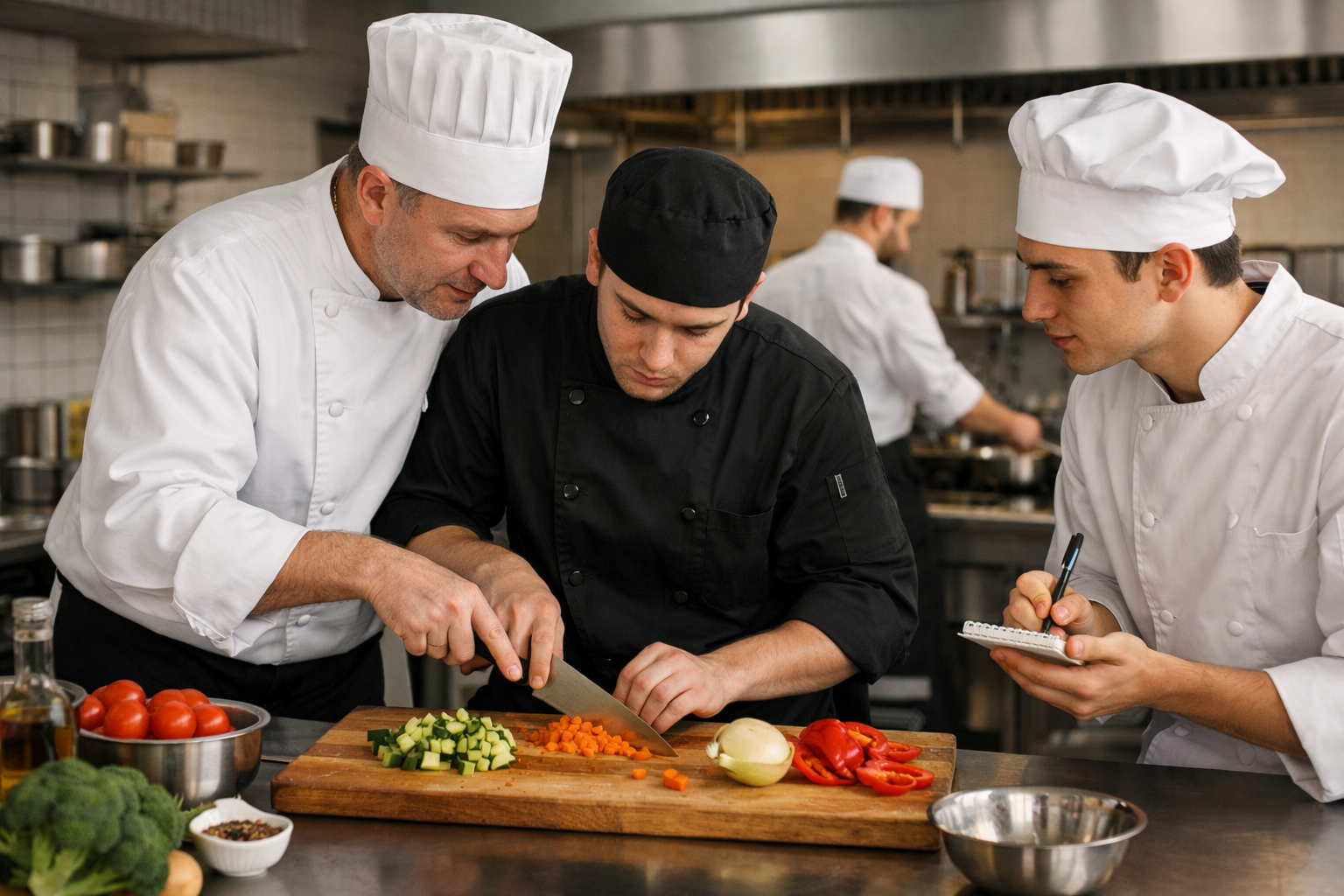
A knife skills class teaches you grip, posture, and core cutting techniques that make every other cooking task easier. These basic techniques form the foundation of home cooking, and once you understand them, everything else clicks.
After years of teaching in our kitchen, we’ve seen the same thing over and over. Students who nail the fundamentals early become confident in the cooking process much faster than those who skip ahead. They stop second-guessing themselves and start trusting their hands.
You leave class knowing how to prep ingredients with more speed and control than before, which changes how you approach every meal.
Three Cuts That Handle Almost Any Entire Recipe
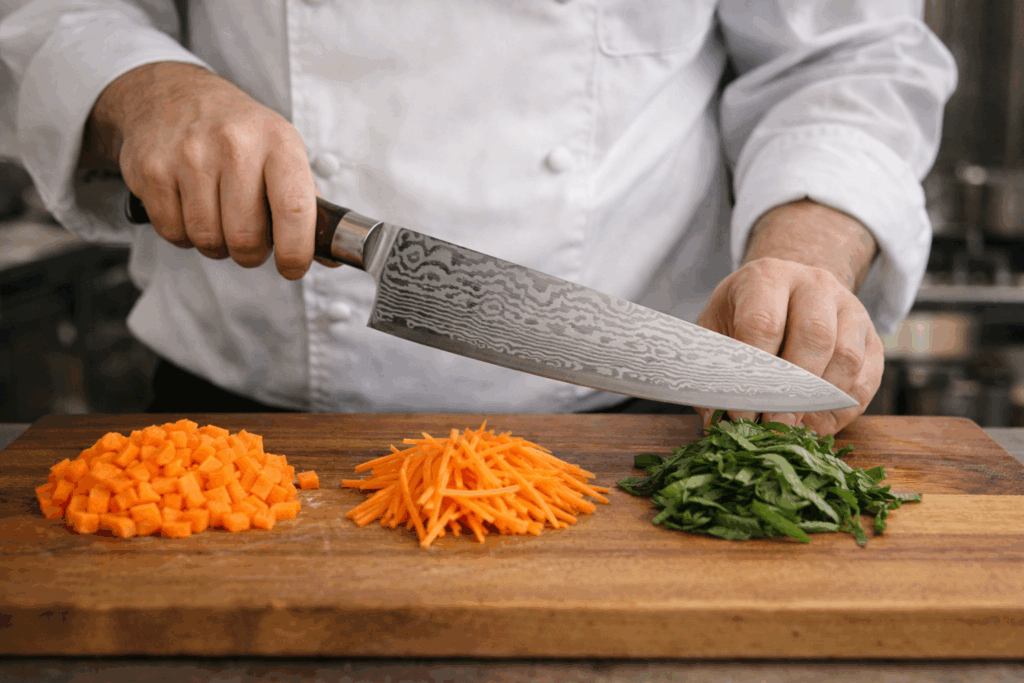
To be honest, you don’t need to learn dozens of fancy cuts to cook well at home. The dice, julienne, and chiffonade cover what most recipes call for, and even a professional chef relies on these daily.
Each cut serves a specific purpose based on how the ingredient cooks or looks on the plate. A fine dice melts into sauces, while a julienne holds its shape in stir-fries. The chiffonade turns leafy herbs into delicate ribbons that sit nicely on top of a finished dish.
Once you get comfortable with these three, picking up other cuts for many recipes becomes much easier.
The Grip That Keeps You Safe and in Control
Most knife injuries happen because of the grip, not blade sharpness. So the way you hold your knife determines how much control you have over every cut.
The pinch grip gives you the most stability by placing your thumb and index finger directly on the blade, just above the handle. Once you’re in this position, the knife stays balanced, and you can guide it with precision instead of force.
Your other hand plays an equally important role. Curl your fingers into a claw shape so your knuckles face the blade and your fingertips stay tucked safely behind. When both hands work together this way, you can cook faster without worrying about nicks or slips.
Bottom line: Good knife skills start with the grip, and everything else you learn builds on this foundation.
Why Good Knife Skills Speed Up Your Whole Cooking Process
Good knife skills cut your prep time in half and let you focus on the actual cooking of food in front of you.
Believe it or not, most home cooks spend more time chopping vegetables than they do at the stove. Once you build confidence with a blade, you stop second-guessing every slice and start moving at a steady rhythm. You’ll notice this most when you’re sautéing vegetables or stir-frying in a frying pan, where timing is everything.
Faster prep also means fresher ingredients since they spend less time sitting out before you start cooking. And when your pieces are the same size, they cook at the same rate using any cooking method, so nothing ends up raw while something else burns.
High heat techniques benefit the most from this, because cooking time gets measured in seconds, and even cuts keep everything on track.
Essential Kitchen Tools for Building Real Cooking Skills
You don’t need a drawer full of gadgets to cook well. What you need are a few essential kitchen tools that actually work the way they should.
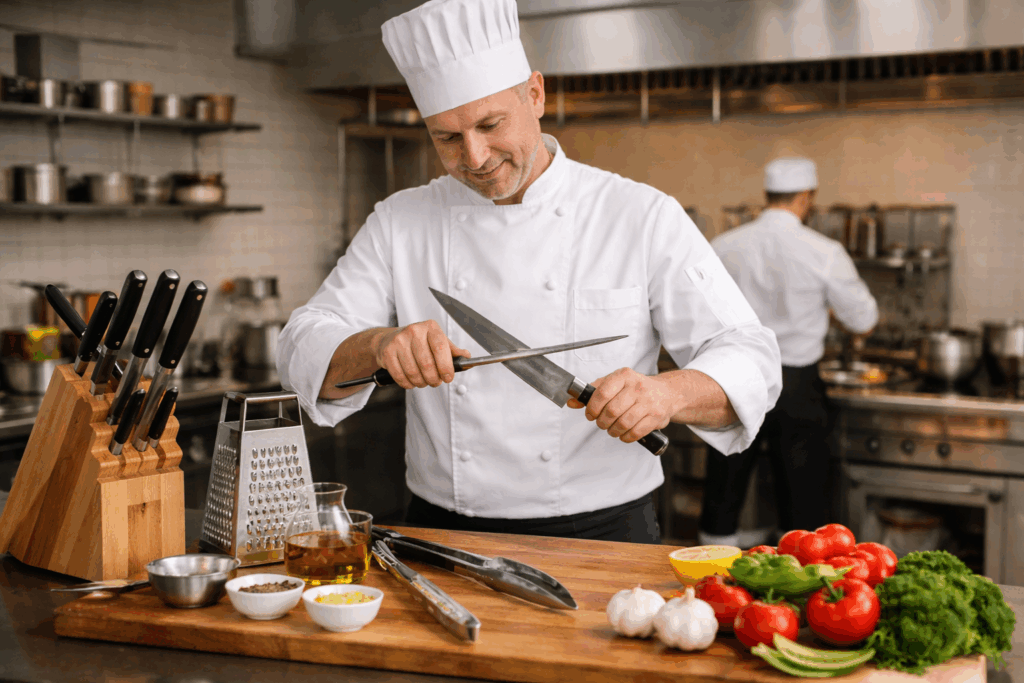
Start with a decent chef’s knife, because a dull or poorly balanced blade fights against you and quickly builds bad habits. Plus, a $30 chef’s knife that holds an edge always beats a $200 block set that sits on your shelf collecting dust.
Beyond the knife, a sauté pan, a non-stick pan, and a set of measuring cups will cover most of what you’ll reach for daily. Just remember to keep metal utensils away from coated surfaces so your cookware lasts.
When it comes to knives specifically, these three will handle almost everything you throw at them:
| Knife Type | Best For | Example Tasks |
| Chef’s knife | Most daily tasks | Mincing garlic, dicing onions, and breaking down a whole chicken |
| Paring knife | Detail work | Peeling fruit, deveining shrimp |
| Serrated knife | Soft exteriors | Slicing bread, cutting tomatoes |
A sharp chef’s knife handles most of what you’ll ever need to cook. The paring knife steps in for smaller jobs where control beats power, and the serrated knife takes care of bread and tomatoes without crushing them.
Cutting Boards and How Material Affects Your Blade
The cutting board you use has a direct impact on how long your knife stays sharp.
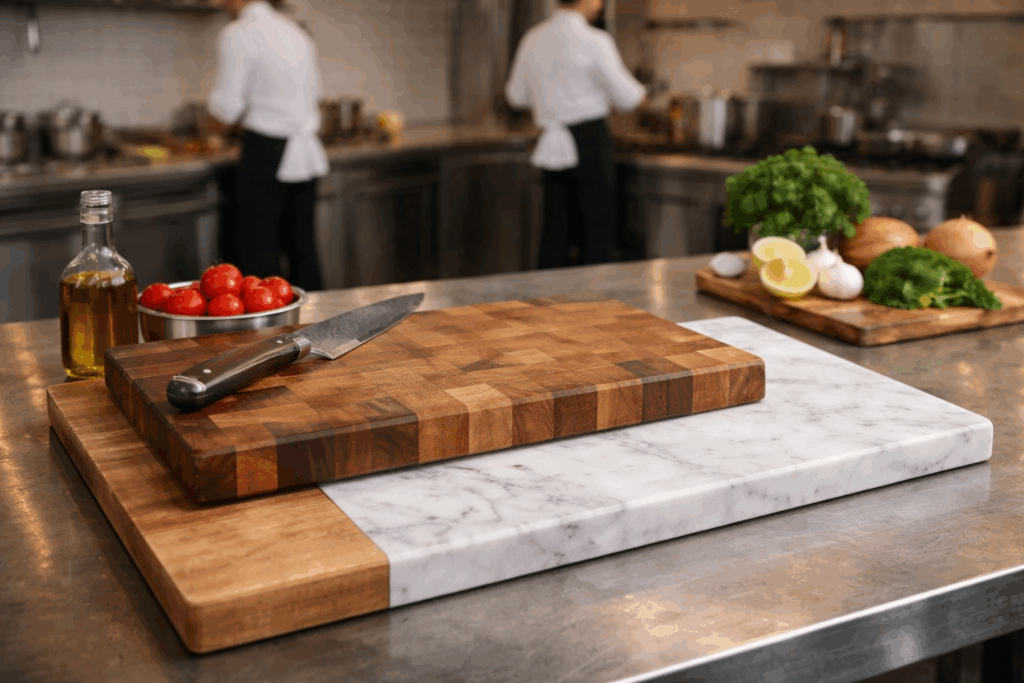
Wood and plastic boards protect your blade while offering enough grip for safe cutting. They absorb the impact of each slice, which helps keep your edge sharper for longer and reduces the chance of the knife slipping mid-cut.
Glass and marble boards are a different story (glass boards dull a sharp blade in just a few uses). They look nice on the counter, but the hard surface wears down your edge and lets the knife slide unpredictably.
Finally, remember to keep separate cutting boards for raw meat and produce to avoid cross-contamination in your kitchen.
Common Cooking Mistakes That Start With Bad Knife Habits
Bad knife habits lead to uneven cuts, wasted cooking time, and higher injury risk when cooking food. However, most of these mistakes are easy to fix once you know what to look for:
- Gripping Too Far Back: Holding the handle at the very end reduces control and wastes energy with every cut.
- Using a Dull Blade: A dull knife needs extra force to cut, which makes it slip off food and into your hand.
- Skipping the Honing Steel: Running your blade along a honing steel before each session keeps the edge aligned and ready to work.
- Rushing Through Prep: Hurried cutting creates random sizes that throw off cooking time with any cooking method.
- Ignoring the Basics Early On: Bad habits stick, and unlearning them later takes twice as long.
Taking a few extra seconds to check your grip, sharpen your blade, and slow down during prep saves you from common cooking mistakes down the line.
How Knife Skills Help You Roast Vegetables and Cook Pasta Better
As we’ve explained before, consistent knife cuts let you roast vegetables evenly and help pasta dishes come together the right way.
Through our practical knowledge from running both a restaurant and cooking school, we’ve seen how much prep quality affects the final plate. When your pieces are uniform, dry heat roasting works the way it should. Flat, even cuts on root vegetables brown better than jagged ones when cooking at high heat, and cubes around one inch work well for most vegetables in a baking dish or roasting pan.
A drizzle of olive oil or vegetable oil helps everything turn golden brown, while hot oil and hot vapor in the oven do the heavy lifting. But this only works if your pieces are the same size.
The same logic applies to cooking pasta. Finely minced garlic melts easily into tomato sauce, while rough chunks stay harsh and overpowering. Grilled fish and cooked meat benefit from even cuts, too, whether you’re using dry heat or moist heat methods.
When to Add Salt and Dried Herbs for the Best Flavor
Salt added early penetrates deeper into ingredients, while late additions stay on the surface. If you add too much salt at the end, you’ll taste it right away without any of it soaking in. For pasta, add more salt to your boiling water before the noodles go in so they absorb flavor from the pasta water throughout.
Dried herbs need heat and moisture to release their natural flavors, so add them early in olive oil and let them bloom. Fresh herbs are the opposite, so toss them in at the end to keep their brightness.
Also, a splash of lemon juice or soy sauce right before serving lifts everything from salad dressing to pantry staples like canned beans. Keep shelf-stable ingredients like onion powder and mincing herbs on hand for quick seasoning in savory dishes.
Your First Step to Learning to Cook Properly
Learning to cook properly at home starts with daily practice using inexpensive ingredients and simple recipes.
Grab an onion, a carrot, and a celery stalk to start cooking your first drill. Set a timer and dice each one, then try to beat your time while keeping the cuts uniform. Recording yourself helps, too, since you can spot bad habits you might not feel in the moment.
Once prep feels automatic and your cooking style develops, you’re well on your way to becoming a confident cook.
Warning: Undefined variable $tax_query in /sites/fiorerestaurant.net/files/wp-content/plugins/advanced-recent-posts/includes/class.widget.small.thumbnails.php on line 123
Recent posts