Italian cooking looks simple on the surface, but anyone who’s eaten at a real Italian restaurant knows how difficult it can actually be. The gap isn’t from fancy equipment or secret ingredients. Instead, there are a few culinary skills that turn basic ingredients into memorable dishes.
Now, let’s be honest here. You can watch a hundred cooking videos and still struggle to recreate restaurant-quality dishes at home. The difference comes down to understanding why techniques work, not just following recipe steps.
After teaching hundreds of students through Fiore Restaurant’s culinary classes over the years, we’ve identified five essential skills that separate home cooks from professional chefs.
Let’s explore each one individually.
Building Flavor Foundations with Soffritto
Soffritto is the foundation of Italian cooking. It’s a slow-cooked mixture of diced onions, celery, and carrots that creates the flavor base for most sauces, soups, and braises in restaurant kitchens.
If you walk into any restaurant kitchen during prep, we guarantee that you’ll smell soffritto before you see it. This aromatic base gives a dish real depth and keeps it from tasting flat. If you rush this step or cut corners, your whole dish ends up on a weak foundation.
Getting soffritto right comes down to three elements:
The Holy Trinity of Italian Vegetables
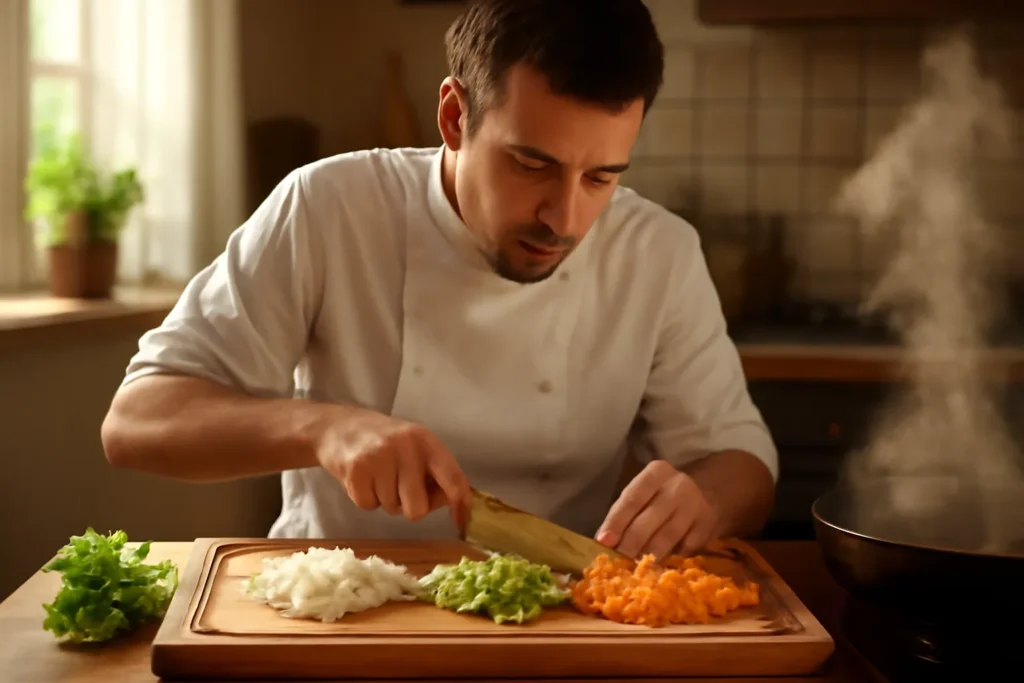
Start by dicing onions, celery, and carrots to a uniform size for even cooking. The ratio varies by region, for example. Northern Italian soffritto uses more celery, while southern versions favor onions for sweetness. In our kitchen, however, we adjust this based on what we’re cooking.
For example, a tomato sauce for pasta gets extra onion, while a meat ragu benefits from more celery to balance richness. The point is to adapt the ratio to match your dish.
Fresh vegetables are also essential here. Old carrots or bitter celery will transfer unpleasant flavors directly into your finished sauce.
Temperature Control for Perfect Soffritto
Perfect soffritto requires patience and proper heat control. Cook your vegetables over low to medium heat so they soften and release their natural sugars without browning. Watch the clock too. It usually takes 8 to 12 minutes for the vegetables to become translucent and tender.
But how do you know if your heat is right? Watch the olive oil. It should bubble gently around the vegetables. Rapid sizzling or smoking means your heat is too high.
Common Soffritto Mistakes to Avoid
Even if you’re in a rush, don’t cook your soffritto on high heat. It just creates bitter, burnt flavors that ruin your dish from the start.
Also, avoid cutting vegetables too large because some pieces will stay raw while others turn mushy. And if you waste even a couple of minutes on that garlic, you’ll end up with bitter bits.
Once you’ve got soffritto down, the next skill builds on those same precision principles.
Mastering Fresh Pasta from Scratch
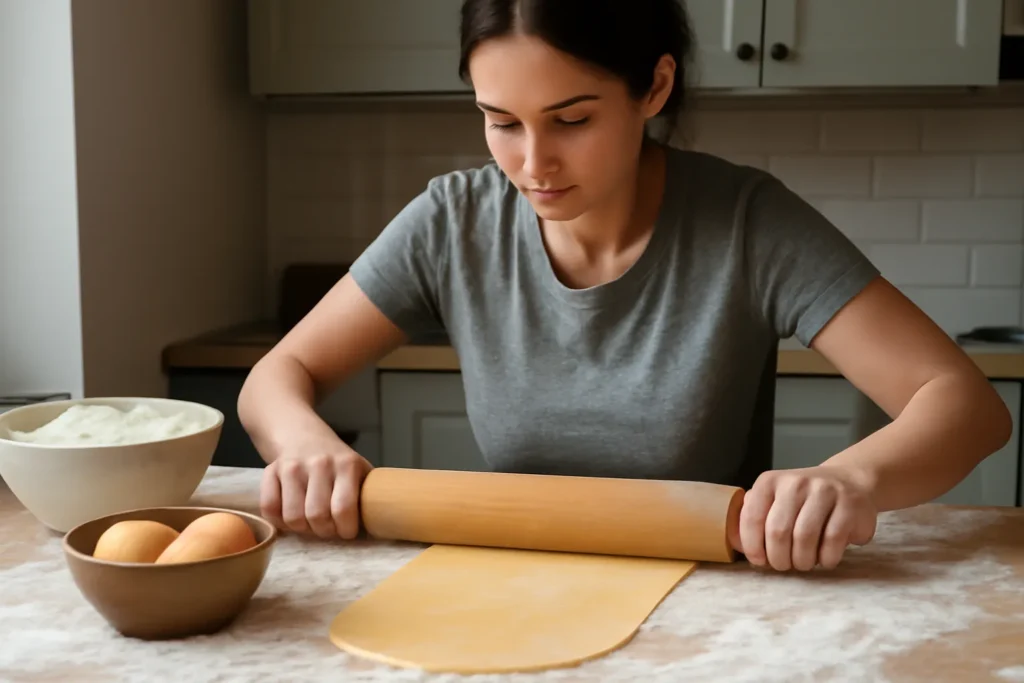
Did you know that your pasta-making process directly affects your final dish’s texture and quality?
Fresh egg pasta from scratch gives you complete control over texture and thickness. With that control, you can create delicate sheets that absorb sauces better than any dried pasta from a box.
And once mastered, you’ll never want to go back to store-bought. The difference in taste and texture is just that good.
The basic ratio: Add 100 grams of flour per large egg. And adjust based on humidity and the flour type you’re using.
When preparing the pasta dough, remember to:
- Knead for 8 to 10 minutes until smooth and elastic
- Let it spring back when pressed to know it’s ready
- Rest the dough for 30 minutes so the gluten relaxes
Now, here’s where most home cooks struggle with fresh pasta: getting the dough rolled thin enough using proper hand-rolling technique.
Hand-Rolling Pasta Like the Pros
First, roll your pasta thin enough to see your hand through it. You want tender sheets that still hold their shape during cooking. Next, dust with semolina flour to prevent sticking without adding excess moisture that would make your fresh egg pasta gummy when cooked.
And finally, keep a consistent thickness throughout the sheet. Uneven sheets mean thin sections overcook while thick areas stay undercooked or raw.
From our experience teaching pasta-making, the most common mistake is rolling the dough unevenly. We’ve seen students press harder on one side than the other, which creates those problem spots.
With pasta technique under your belt, let’s tackle another dish that demands your full attention.
Risotto: Timing and Technique
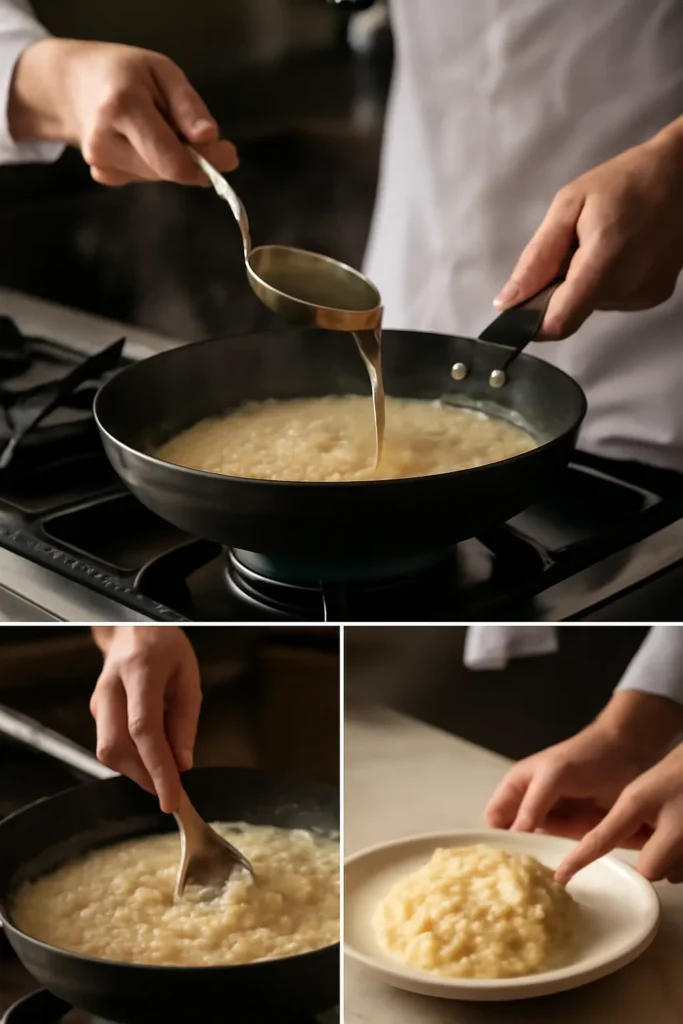
Ever notice how restaurant risotto gets creamy without any cream? The secret is timing and attention that slowly releases starch from the rice.
If you’ve ever tried making risotto at home and walked away for even a minute, you’ve probably come back to a sticky mess or burnt rice stuck to your pan.
So, to avoid these mistakes, we encourage mastering these two steps:
1. Stock Temperature and Addition Timing
Your stock must stay at a simmer in a separate pan. This is because cold liquid would shock the rice and stop the cooking process completely.
Add one ladle of stock at a time, stirring constantly until the liquid is almost completely absorbed before adding more. The gradual addition releases the starch that professional chefs aim for in restaurant kitchens.
The entire process usually takes 18 to 22 minutes, with rice gradually releasing starch for natural creaminess throughout your dish.
2. The Mantecatura Finish
Remove the pan from the heat before adding butter and cheese. This keeps the fats from separating and prevents a greasy texture.
Next, use a steady, circular motion to emulsify (blend thoroughly together) fats into the risotto. This movement creates a glossy, velvety finish that coats each rice grain. The final texture should flow slowly across the plate, described as “all’onda” or wave-like.
Professional Knife Skills for Italian Prep
Sharp knife skills speed up your prep time dramatically. Dice vegetables for soffritto in minutes instead of struggling through uneven cuts that cook inconsistently.
And the bonus is: you’ll feel more confident in the kitchen. A Journal of Nutrition Education and Behavior study found that consistent knife skills training noticeably improved cooking confidence and efficiency over time.
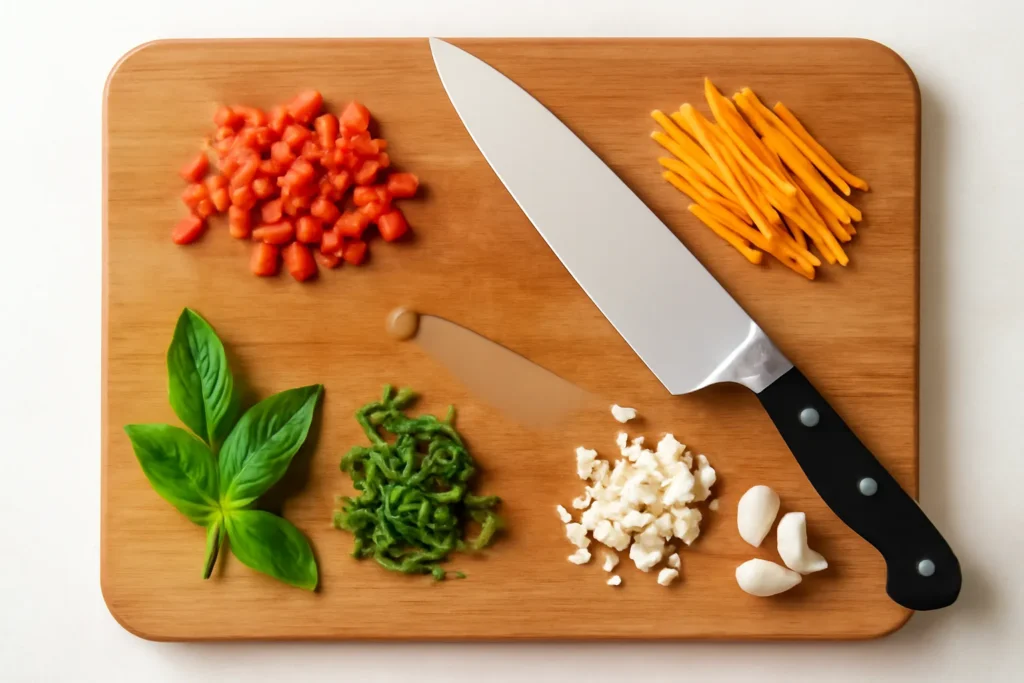
So here are the four cuts you’ll use most:
- Brunoise Cut: Produces tiny 2mm cubes perfect for soffritto. Use a sharp knife and proper claw grip for safety.
- Julienne Strips: These measure 3mm by 3mm by 5cm, uniform pieces that all finish cooking at the same time. This consistency is especially useful when prepping vegetables for multiple dishes at once.
- Chiffonade Technique: Roll basil leaves tightly before slicing into delicate ribbons. The leaves won’t bruise or turn black from crushing this way.
- Mincing Garlic: Use a rocking motion with occasional smearing using the knife’s flat side. You’ll end up with a smooth paste without needing a press.
Pro Tip: Hone your knives before each cooking session and get them professionally sharpened every few weeks.
Braising and Slow-Cooking for Depth
Once you’ve mastered quick-cooking techniques, braising and slow-cooking teach you patience. These cooking methods take tough cuts of meat and break them down into tender, flavorful dishes like ragu and osso buco.
Start by browning the meat first in your pan. This builds fond on the bottom, which you’ll deglaze with wine to add depth and complexity to sauces. Next, lower the oven temperatures between 300-325°F to let the collagen convert into gelatin slowly. You end up with tender, fall-apart meat that melts in your mouth.
Take a traditional Bolognese ragu, for example. It simmers for 3 to 4 hours. The flavors deepen and concentrate while the fat renders completely. You can’t rush this process.
Taking Your Culinary Skills to the Next Level
Building your culinary skills can feel overwhelming when you’re just starting out. You watch restaurant chefs work with ease and wonder how you’ll ever get there. The good news is these skills aren’t reserved for professionals. And with the right training and consistent practice, anyone can master them.
If you’re pursuing a culinary career, formal training programs and food safety certifications can accelerate your progress. That said, consistent home practice works just as well for elevating your everyday cooking. Start by experimenting with different Italian recipes and regional variations to build confidence with each technique.
Ready to see these techniques in action? Visit Fiore Restaurant, where our chefs create an authentic dining experience with every dish we serve. Or take the next step and join our culinary classes for hands-on training directly from experienced professionals.
Warning: Undefined variable $tax_query in /sites/fiorerestaurant.net/files/wp-content/plugins/advanced-recent-posts/includes/class.widget.small.thumbnails.php on line 123
Recent posts