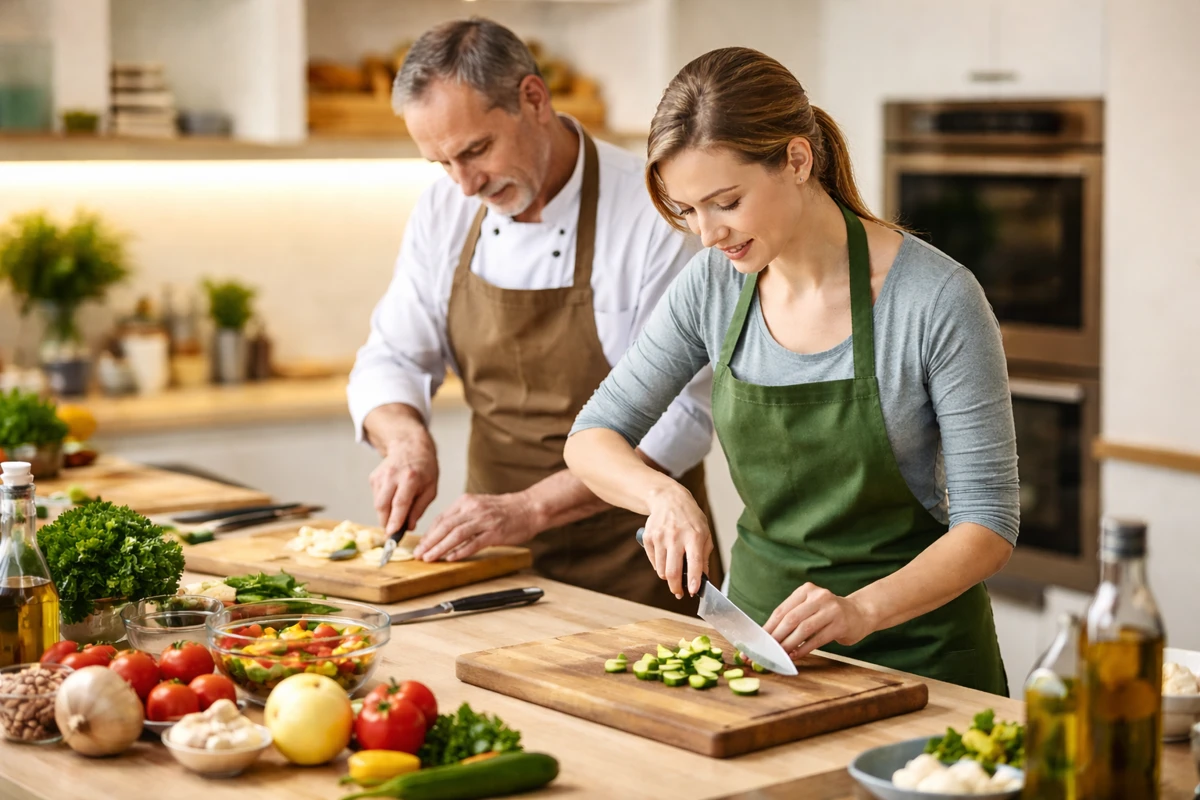
Did you know that one in four Americans feels intimidated by cooking in their own kitchen? It’s because watching someone dice an onion on YouTube doesn’t prepare you for the moment your eyes start watering and your cuts come out uneven.
When you receive hands-on cooking classes, you can learn what properly minced garlic really feels like. And your skills are enhanced because you’re using real ingredients, not just taking notes.
This article breaks down the cooking techniques you’ll practice in hands-on classes. You’ll also see how food safety becomes a routine, and the way menu planning gets easier once you understand how cooking ingredients behave together.
Let’s find out how you can handle the pressure of a real kitchen.
What Makes Hands-On Cooking Different from Watching Videos?
Hands-on cooking classes put you in front of a stove with ingredients and tools, while video tutorials leave you guessing about temperature, texture, and timing.
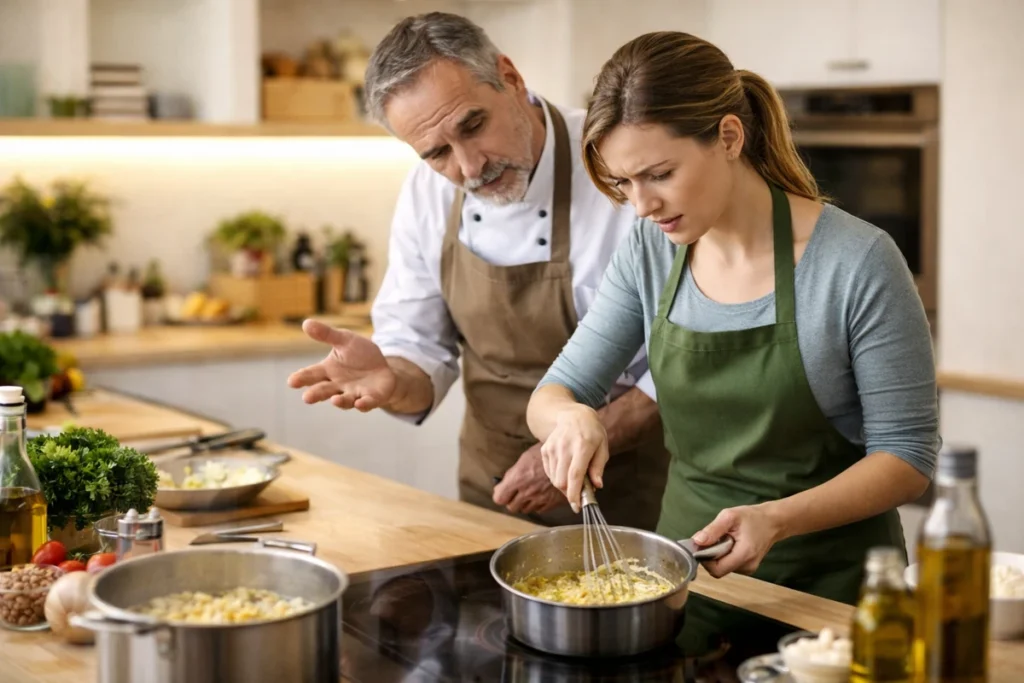
Here’s why hands-on learning is more effective.
- You Learn by Doing: Your hands remember techniques better than your eyes when you physically practice each cut. And videos can’t tell you when your pan reaches the right heat or when garlic starts turning brown. You build that sense through experience.
- Immediate Feedback: An instructor can tell you why your sauce broke or your pasta stuck together right when it happens (nobody warns you that one extra degree turns hollandaise into scrambled eggs). What’s more, your questions get answered in real time, rather than pausing videos fifty times trying to figure out what went wrong.
- Learning Texture and Timing: Once you’ve felt what properly cooked meat should feel like, you stop worrying about serving raw chicken to your family. You learn how minced garlic cooks faster than sliced garlic by smelling the difference as both hit hot oil, and that’s only one example.
Look, watching a chef dice onions on screen can not match the experience of trying to copy their technique. It’s because your brain stores information when you actually use your hands instead of just watching someone else cook.
Knife Skills: The Foundation Every Cook Needs
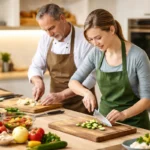
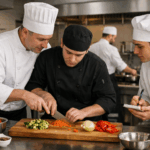
Proper knife grip and finger placement prevent accidents and make chopping vegetables feel natural instead of stressful. In fact, once your grip feels right, chopping becomes almost meditative instead of something you dread.
Consistent cuts allow everything to cook evenly instead of some pieces burning while others stay raw. Like when you dice onions into uniform pieces, they all hit that perfect golden brown at the same time.
Along with that, learning the difference between dicing, mincing, and julienne gives you control over texture and presentation in every dish you prepare. A professional chef knows that finely minced garlic releases more flavor than roughly chopped cloves.
These fundamentals change how you approach comfort food recipes and more complex cooking techniques.
Common Cooking Techniques You’ll Practice in Class
Want to know the difference between someone who cooks confidently and someone who panics? The former burned enough garlic to know exactly when to pull the pan for a roast, and when for a sauté.
These are some cooking methods that build the backbone of what you’ll practice in every class:
- Sautéing with Oil: This technique teaches you the pan temperature and when to move ingredients around to keep a crunch to everything. You learn to hear the sizzle that tells you the heat is just right for vegetables.
- High Heat Roasting: Roasting chicken or vegetables is how dry heat creates crispy exteriors while keeping interiors tender. The caramelization during this technique develops a flavor you can’t replicate with other cooking methods.
- Low and Slow Braising: Tough cuts of meat only become fall-apart tender when they’re braised low and slow for hours. This patience rewards you with depth of flavor and texture you simply can’t rush.
- Blanching and Shocking: When you drop vegetables in boiling water briefly and then plunge them into ice water, it locks in bright colors and crisp texture. This technique works wonders when preparing multiple dishes ahead of time.
- Gentle Poaching Method: If you want delicate seafood and eggs to stay tender instead of turning rubbery, keep your liquid just below the boiling point. This gentle cooking method preserves texture better than any other technique.
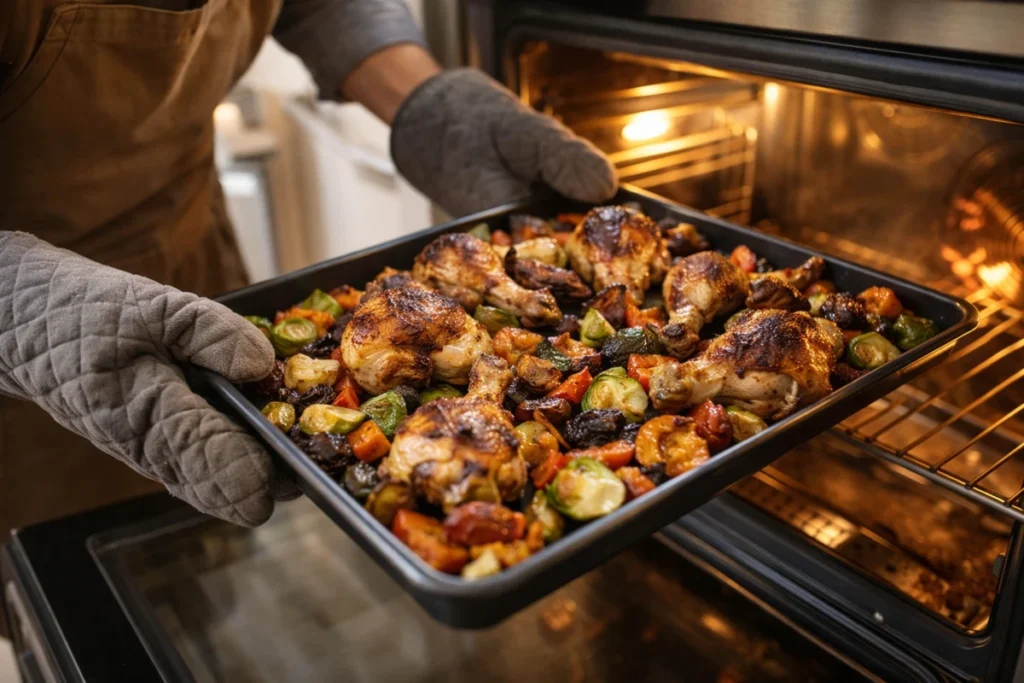
Once you master these fundamentals, you can tackle any recipe that comes your way. They let you create delicious dishes without following a recipe word for word.
Food Safety Habits That Become a Routine
During the prep work in class, you learn proper handwashing, cross-contamination prevention, and when to sanitize cutting boards. This repetition makes food safety become a habit instead of something you have to think about every time you prepare food.
Instructors show you safe internal temperatures for different proteins using thermometers instead of guessing by appearance (because pink chicken is a hospital visit, not a dinner option).
You can also practice checking meat temperatures until you know when chicken hits 165°F and when a steak reaches your preferred doneness. This essential part of cooking protects everyone who is eating your food.
On top of that, proper food storage temperatures and shelf life guidelines become second nature when you practice them repeatedly. You learn which food items can sit at room temperature and which need to go straight into the refrigerator.
These habits stay for a long time because a chef instructor walks you through them with real ingredients in a kitchen environment, not just through a textbook.
Menu Planning Starts with Understanding Ingredients
Planning a menu gets easier when you understand how ingredients work together across multiple courses. That way, you stop throwing random dishes together and start thinking about how each part of the meal complements the next.
This is how you can understand your ingredients better.
Seasonal Produce Changes How You Cook
Learning which fruits and vegetables are at their peak helps you plan fresh menus. It becomes easier to cook when you work with what’s in season instead of fighting against it.
For example, Spring vegetables like asparagus and peas need lighter preparations than hearty winter squash and root vegetables. Meanwhile, summer tomatoes taste completely different from winter tomatoes and change how you build sauces for simple ingredients.
Balancing Flavors Across Multiple Dishes
Too many cooks in the kitchen isn’t the only way to ruin a meal, but serving three heavy courses will do it, too. Say, a rich pasta course needs a lighter salad before it and a refreshing dessert after.
With cooking classes, you learn not to serve three cream-based dishes in one menu, or everything tastes monotonous. Contrasting flavor profiles between courses keeps diners interested from the first bite to the last. This helps you create a delicious meal instead of overwhelming your family with repetitive tastes.
Italian Cuisine Shows You Simplicity
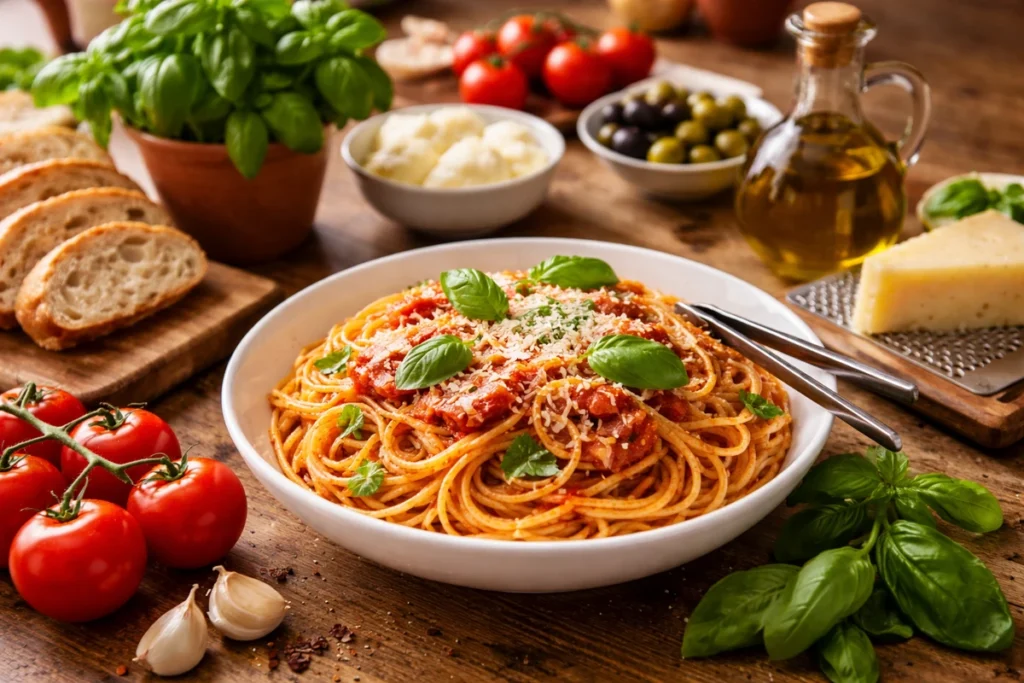
Through teaching authentic Italian methods, we’ve seen home cooks finally understand why Nonna never needed fifteen ingredients to create magic. Simple ingredients like quality olive oil, fresh basil, and ripe tomatoes create better dishes than complicated recipes with twenty components.
This is how traditional Italian cooking proves that proper culinary techniques are much more important than fancy equipment. Their essential techniques let you focus on basic ingredients that taste amazing instead of hiding poor quality behind complexity.
Nutrition Knowledge Makes You a Better Cook
Most cooks have no idea they’re zapping half the vitamins out of broccoli just because nobody ever explained which cooking method preserves what. This knowledge helps you make better choices when you’re standing in front of the stove deciding how to prepare vegetables.
Take a look at how nutrition knowledge enhances your cooking:
- Cooking Methods and Nutrient Retention: High heat destroys water-soluble nutrients while gentle cooking methods preserve them. So understanding how different techniques affect vitamins helps you choose steaming over boiling for certain vegetables.
- Accommodating Dietary Restrictions: Modern diners ask about calories, protein, and dietary benefits, so you need answers beyond just taste. You also learn to work around food allergies and dietary needs without sacrificing flavor or making guests feel excluded (they’re not being picky, they’re being informed).
Nutrition knowledge separates you from beginner chefs who just follow recipes. You’ll feel more confident experimenting once you know the basics of how cooking affects the food you prepare.
Start Building Your Culinary Skills This Week
Cooking classes teach you knife skills, cooking methods, and food safety through actual practice. You also build confidence by working with real ingredients and getting immediate feedback on your technique.
The culinary skills you learn hands-on stick with you because your hands remember what your eyes alone never could. So start with one class focusing on techniques you use most often, like knife work or sautéing.
Visit Fiore Restaurant and our hands-on cooking courses to build skills that last. We offer comprehensive culinary classes where you cook alongside experienced instructors in a real kitchen setting. You’ll leave each class with new techniques and the courage to recreate what you learned in your own kitchen.
Warning: Undefined variable $tax_query in /sites/fiorerestaurant.net/files/wp-content/plugins/advanced-recent-posts/includes/class.widget.small.thumbnails.php on line 123
Recent posts