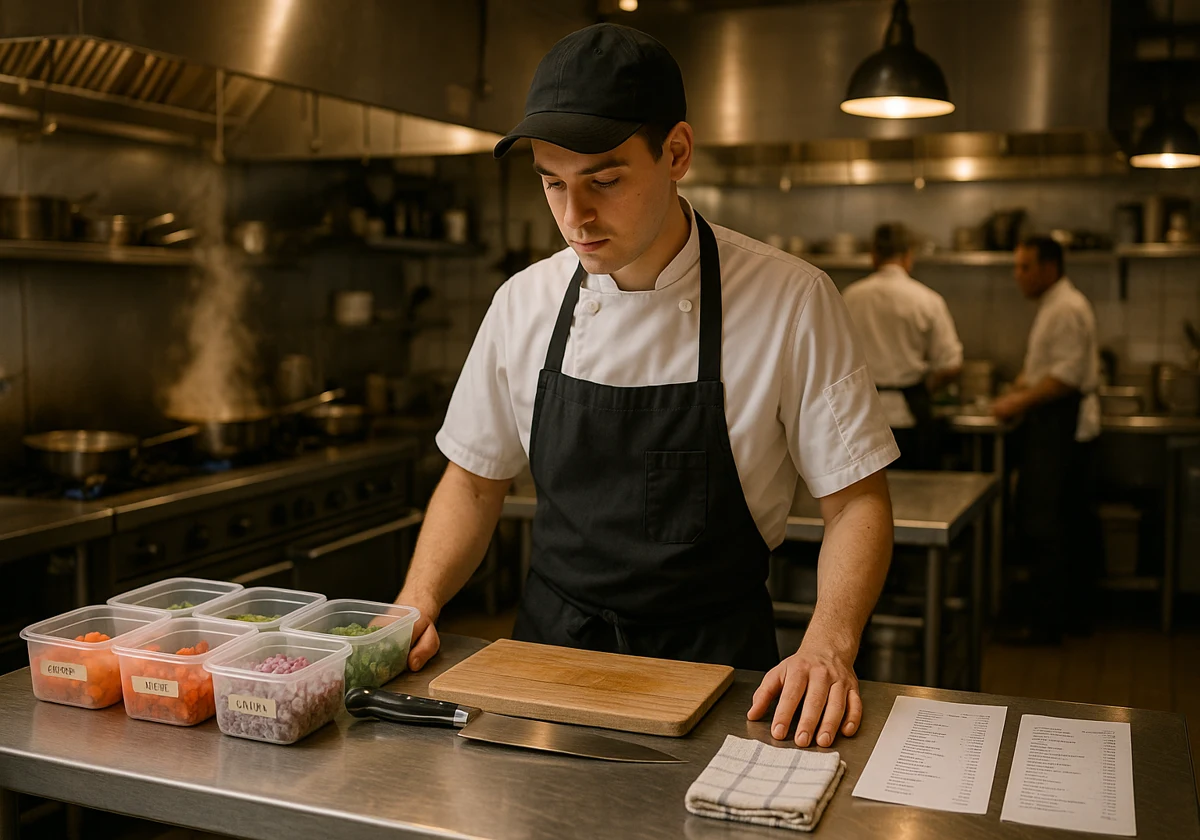
You build kitchen confidence by mastering one task at a time, setting your station properly before service, and staying composed when the heat kicks in. We’ve seen that new cooks who focus on consistency over speed adapt faster and earn trust sooner.
However, the hard part is staying in control once service hits full speed. Most cooks lose their cool, and focus scatters as tickets stack up.
This guide breaks down how to prep effectively, handle rush periods without spiraling, and build skills that make you dependable on any line. By the end, you’ll tackle any service with calm, focus, and confidence.
Ready? Let’s get started.
Why Kitchen Confidence Starts With Small Wins
Kitchen confidence builds through mastering simple tasks like boiling pasta, frying an egg, or making a basic sauce before moving to complex techniques. One perfect omelette teaches you more about heat control and timing than attempting beef wellington on your first try. Start with scrambled eggs and aim to make them fluffy, not rubbery, every single time.
Once you can nail that basic task without thinking, try sauteing vegetables. Use the same pan, apply a similar technique, and adjust the timing slightly. Then maybe a frittata, which combines both skills. Each step builds on what you already know instead of throwing you into unfamiliar territory.
The goal isn’t to become a great cook overnight. Master one recipe solidly, then build from there. That’s how you go from nervous about boiling water to confidently managing a full station during rush hour.
Prep Work That Sets You Up for Success
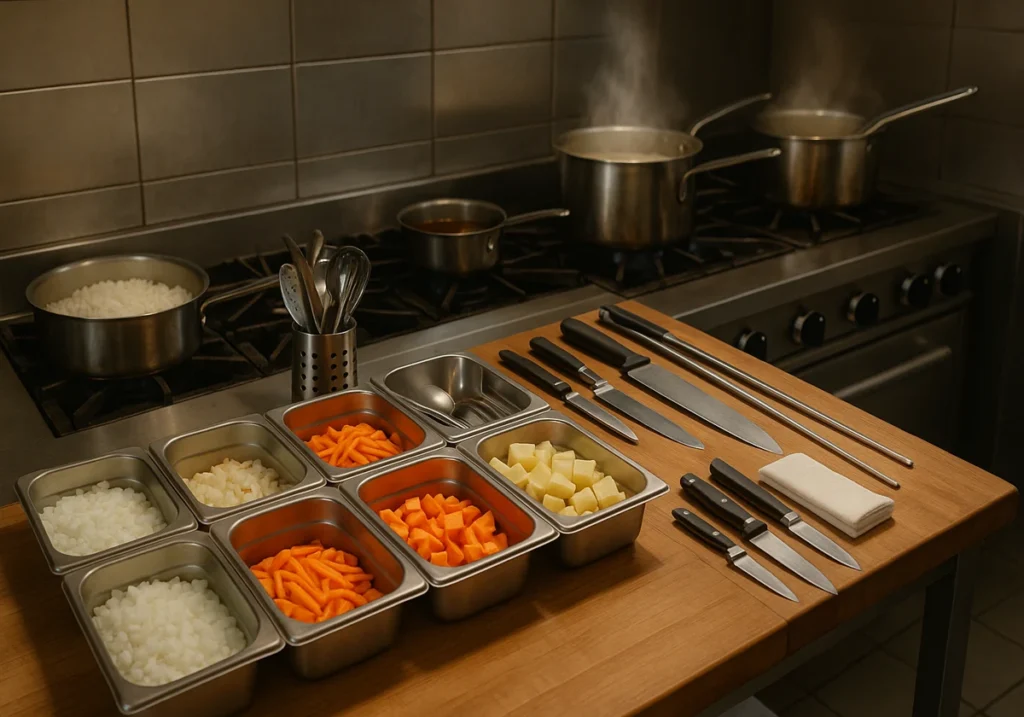
The best part about solid prep work is that you spend service cooking instead of scrambling for ingredients. After working through countless dinner rushes, we learned that organized stations separate smooth service from complete chaos.
Set up your station with these essentials:
- Vegetables: Dice your onions, slice your carrots, and portion root vegetables into clean containers within arm’s reach before service starts.
- Tools: Keep tongs, spatulas, and ladles at your station so you can grab them without looking mid-ticket.
- Components: Cook your rice, reduce your sauces, and bring pasta water to a boil before the dining room fills up.
A properly set station means you’re executing dishes cleanly while everyone else is still looking for their next ingredient.
What Happens When the Tickets Keep Coming?
The ticket rail fills up fast, orders stack, and the kitchen can feel chaotic. New cooks tend to panic and start cooking random dishes, which only creates a bigger mess.
To avoid that, use these two strategies when the heat is on.
Read Your Tickets Before You Panic
Look at all your orders first to spot which dishes share similar cooking methods or ingredients. Two chicken orders and a pasta can fire simultaneously if you group them right.
You might be thinking this scanning takes too long, but thirty seconds of planning saves you ten minutes of chaotic bouncing between unrelated tasks. Know your full board before starting anything, or you’ll end up with dishes sitting under the heat lamp getting cold.
Break Service Into Small Bursts
Focus on your next three tickets instead of staring at all fifteen (we’ve all had that deer-in-headlights moment). Complete one small batch, reset your brain quickly, then tackle the next wave.
Your food quality stays higher when you’re not rushing through everything, trying to catch up all at once. This approach keeps your cooking consistent because each dish gets the attention it deserves.
Deliberate Movements Beat Frantic Speed
Watch any experienced line cook during rush, and you’ll notice they move half as much as rookies but get twice as much done. The reason comes down to planning each step before moving.
Think through your next few actions before you leave your station. Grab your pan, the butter, and three eggs in one trip instead of making three separate walks across the kitchen. It may seem minor, but carrying multiple items at once saves energy when service runs long.
Moving efficiently also makes you look composed, even during peak hours at full speed. The chef notices when you’re not running around like crazy, and that calm presence shows you’re handling the job without falling apart.
The Right Time to Ask Questions
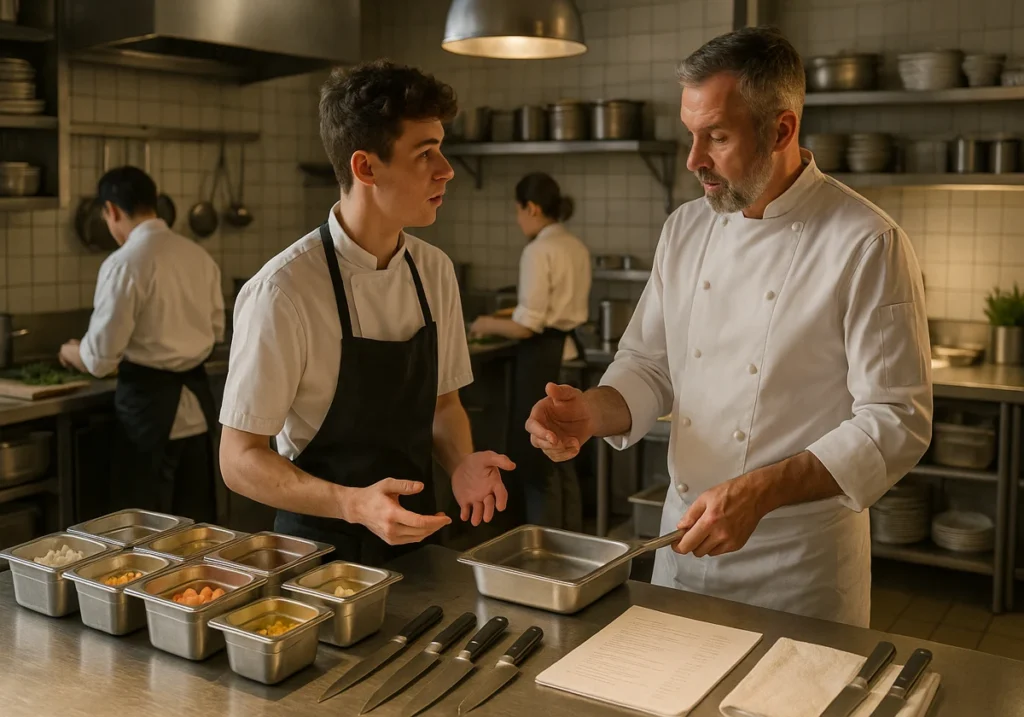
The right time to ask questions is during prep hours when chefs have time to explain cooking techniques without service pressure. Get clarity on methods during your prep shift to avoid guessing mid-service when fixing mistakes isn’t an option.
Learn your plating standards early, so you’re not redoing dishes while new tickets keep printing behind you. Ask about portion sizes, cooking temperatures, and how the chef wants each component arranged on the plate (most refires come from unclear instructions, not lack of skill).
Once service starts, you’re expected to execute what you’ve already learned. That’s why experienced cooks ask everything upfront during slower moments instead of interrupting the chef when tickets are flying, and the entire team is counting on smooth communication.
Taste as You Cook: The Path to Delicious Dishes
Let’s be honest here. Most cooks skip tasting during busy service because they’re rushing, and that’s exactly when bland dishes start leaving the kitchen.
Make tasting part of your rhythm:
- Taste Your Sauces: Sample after every few plates to catch seasoning issues before an entire table gets undersalted food or a sauce that’s lost its balance.
- Adjust Gradually: Sample as you go to see how heat and time affect flavors rather than blindly following recipe measurements that might need tweaking based on your ingredients.
- Build Flavor Layers: Salt brings out other flavors. Lemon juice brightens heavy dishes. A pinch of sweet balances savory without overpowering the main taste you’re building.
Your palate is your most reliable tool on the line. Taste consistently throughout service, and you’ll catch problems before they leave your station.
The Core Cooking Techniques Every Station Needs
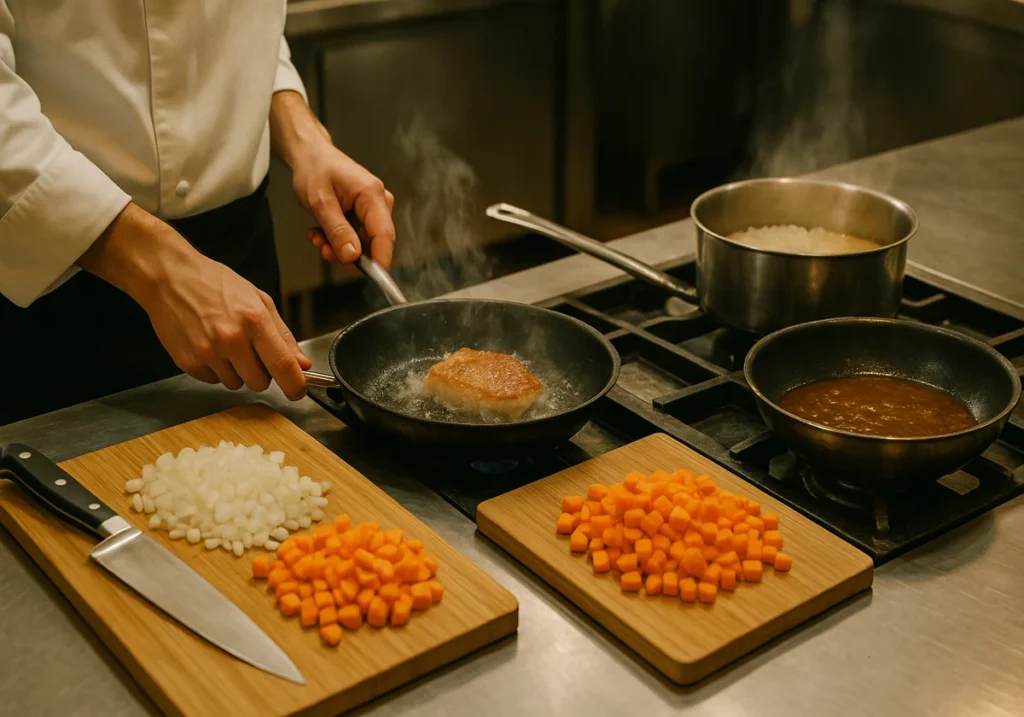
Tasting helps you adjust in the moment, but the foundational cooking techniques you master determine how consistently you execute dishes. Most home cooks chase recipes, while professional cooks focus on core methods that apply across every station.
Through our practical experience training new line cooks, we’ve seen that three techniques show up repeatedly, no matter what you’re cooking. Master these, and you’ll handle most dishes confidently:
1. High Heat Searing
A study by Seoul National University and Korea Food Research Institute found that seared steaks scored significantly higher for overall flavor and roasted-meat aroma than oven-cooked ones. To achieve the same results, your pan needs to be hot enough that chicken, fish, or meat sizzles immediately when it hits the surface. This rapid searing develops proper color and texture instead of gray, steamed proteins.
2. Consistent Knife Cuts
Ever notice how restaurant vegetables cook perfectly while yours turn out half-raw, half-mushy? The difference comes down to uniform sizing. Dice your onions and carrots to match sizes so they all finish at the same time.
3. Sauce Reductions
This is where precision pays off. At this stage, watch your pan as liquids reduce and flavors concentrate, and pay attention to how butter emulsifies or pasta water binds your sauce. Once you recognize these cues, you’ll know exactly when to stop reducing or when to add more liquid.
Quick tip: Practice these techniques during family meal or slow prep shifts before applying them during peak service. Your mistakes won’t cost the restaurant money, and you’ll build muscle memory when the pressure is off.
Build Trust Through Reliable Cooking
Once you’ve survived a few busy shifts without melting down, your next challenge is earning respect from the team around you. Consistent cooking builds that trust faster than anything else.
Focus on hitting your ticket times reliably so the expo knows your station won’t back up the line during a rush.
Then focus on quality. Your hundredth plate should look as good as your first, which shows more skill than attempting flashy techniques you haven’t mastered yet. That’s how you hit your stride and become someone the team actually wants on the schedule.
Show Up Ready Tomorrow
Building kitchen confidence doesn’t happen overnight, but it does happen when you show up consistently and apply what you’ve learned. New cooks who focus on prep, stay calm during service, and deliver reliable cooking become better cooks faster than those who try skipping steps.
Pick one technique from this guide tomorrow. Maybe it’s organizing your station more deliberately, or tasting your sauces throughout service. Small changes add up when you practice them every shift.
The skills that make you feel comfortable on the line are the same ones that help you create delicious dishes under pressure. For more helpful guidance on building these skills, explore our cooking classes at Fiore Restaurant, where hands-on learning builds real kitchen confidence.
Warning: Undefined variable $tax_query in /sites/fiorerestaurant.net/files/wp-content/plugins/advanced-recent-posts/includes/class.widget.small.thumbnails.php on line 123
Recent posts