An authentic Italian restaurant brings together three elements: proper cooking techniques, genuine hospitality, and an atmosphere that invites guests to linger. When these come together, the experience feels personal rather than mass-produced.
Most diners can sense this difference, too, even if they cannot clearly explain what creates it. After years of cooking and teaching Italian food, we have seen firsthand how these details influence the entire dining experience.
So, in this guide, we’ll explain what to look for when choosing where to eat. We’ll also explore regional traditions, why seasonal ingredients are important, and the service style that sets Italian restaurants apart.
By the end, you will have a clear understanding of what real authenticity looks like, both on the plate and beyond it.
What Makes an Authentic Italian Restaurant Stand Out?
As we’ve already mentioned, an authentic Italian restaurant brings together proper cooking techniques, genuine hospitality, and an atmosphere that welcomes every guest.
You’ll notice it in the food first because every dish reflects real care and tradition. Then the service confirms it by making you feel like part of the family. And since Italian dining usually puts connection first, servers never push you through courses. This slower pace allows time to enjoy the meal and the company around the table.
We see this in our own kitchen every day, where honest technique and quality ingredients consistently take priority over shortcuts.
How Italian Food Reflects Regional Traditions
Italian food reflects regional traditions because every part of the country cooks according to its climate, geography, and local ingredients. A carbonara made in Rome, for example, tastes completely different from one prepared in Milan. Each area guards its recipes with pride, and that local identity shapes what ends up on your plate.
Here’s how those regional differences play out.
Northern Italy Brings Richness to the Table
Northern Italian cooking leans toward butter, cream, and risotto because the colder climate calls for heavier dishes. That’s why rich polentas and braised meats show up on most menus here. And since dairy runs the show, olive oil takes a back seat here.
Southern and Coastal Flavors Stay Light and Bright
Once you head south, the flavors shift entirely.
Olive oil, tomatoes, and fresh seafood dominate because the warmer weather suits lighter cooking. If you move inland, you’ll find cured meats and hearty pastas instead.
And believe it or not, Italian cooks get genuinely protective over these regional recipes. For instance, a Bolognese made in Bologna follows strict traditions that a Roman kitchen would never touch.
Now, let’s look at how the seasons shape these dishes even further.
The Role of Seasonal Ingredients in Italian Cuisine
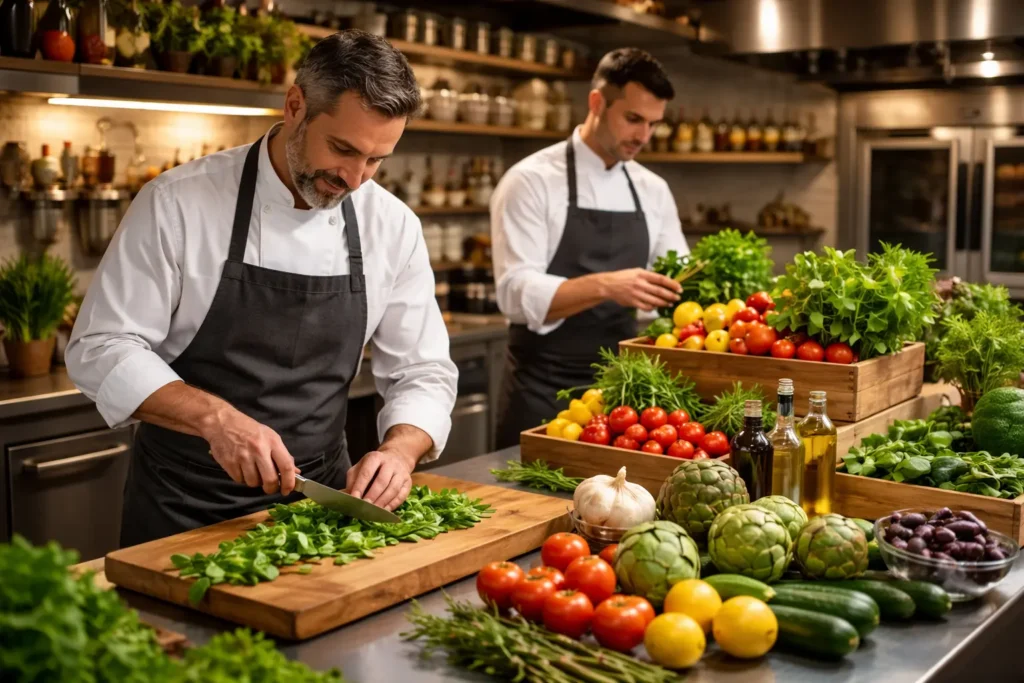
The best part about seasonal ingredients is that every dish tastes brighter, fresher, and more alive on your palate. Italian cuisine builds menus around what grows right now rather than what ships well from across the world (and yes, your taste buds will know the difference).
So here’s what you’ll typically find on an Italian menu throughout the year.
| Season | Featured Ingredients |
| Spring | Artichokes, peas, asparagus, fresh herbs |
| Summer | Tomatoes, basil, zucchini, eggplant |
| Fall | Mushrooms, squash, hearty greens, figs |
| Winter | Root vegetables, citrus, and braising meats |
This constant rotation keeps the kitchen creative and the food tasting vibrant. When a restaurant locks itself into a fixed menu year-round, dishes start to taste flat because the ingredients lose their peak flavor. Seasonal cooking, however, forces chefs to adapt, and that flexibility shows up in every bite.
What’s more, Italian cuisine treats seasonality as a principle rather than a trend. The best restaurants follow the calendar closely, which is why their menus shift every few months.
Once that’s established, simplicity becomes the next piece of the puzzle.
Why the Best Italian Restaurants Focus on Simplicity
Most classic Italian dishes use fewer than five ingredients, and that restraint is exactly what makes them memorable. The best Italian restaurants understand this principle because loading a plate with too many flavors only hides mistakes and confuses the palate (that’s a risk few kitchens can recover from).
So what does real simplicity look like? Take a traditional cacio e pepe. It calls for just pasta, pecorino cheese, black pepper, and pasta water. When you strip a dish down that far, every ingredient has to earn its place. This approach reflects a core philosophy in Italian cooking where fresh, high-quality ingredients speak for themselves.
Ultimately, this simplicity demands confidence because the cook has nowhere to hide. Even a slightly overcooked noodle or dull cheese stands out immediately, which is why only skilled kitchens pull it off consistently.
Fresh Pasta vs Dry Pasta: When Each Shines
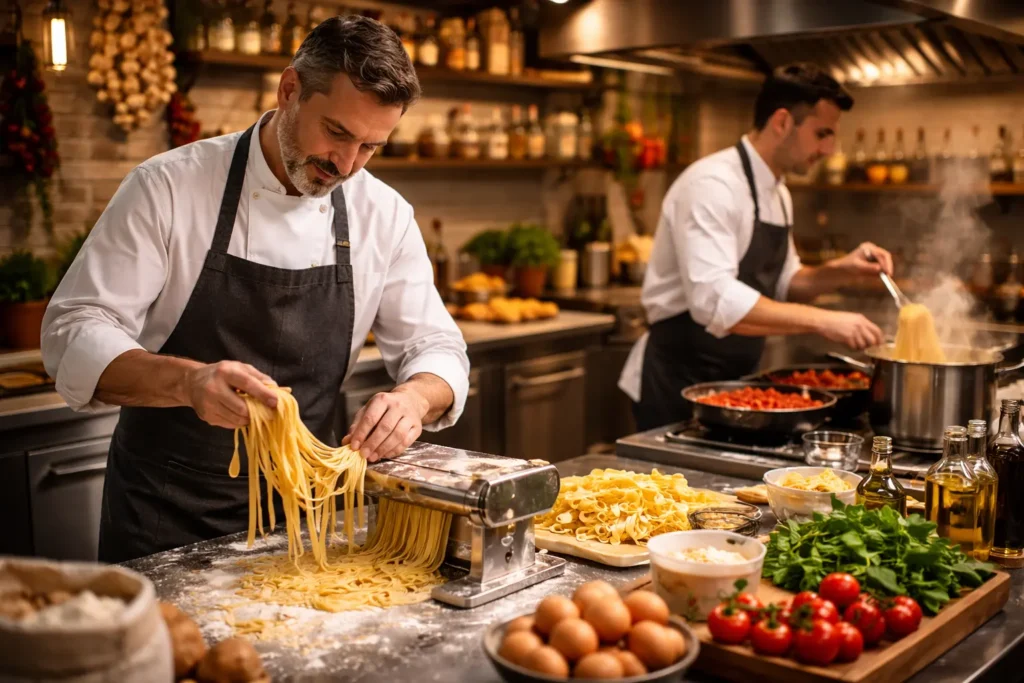
Fresh pasta pairs with lighter sauces while dry pasta stands up to bold, strong flavors like slow-cooked ragùs. Each type has a purpose, and knowing when to use which one separates a thoughtful kitchen from a careless one.
Here’s what it looks like in practice:
When to use fresh pasta:
- Delicate Sauces: Butter and sage or light cream-based preparations let the soft, silky texture shine through.
- Filled Varieties: Ravioli and tortellini need that tender dough to complement the stuffing inside.
- Texture-forward Dishes: When the pasta itself is the star, fresh dough delivers a rich, egg-forward bite.
When to use dry pasta:
- Bold Sauces: Marinara, arrabbiata, and slow-cooked meat ragùs cling better to the firmer surface.
- Oil-based Dishes: Aglio e olio works because the pasta water emulsifies with the dry pasta’s starchier texture.
- Baked Preparations: Pasta al forno holds its structure through oven heat without turning mushy.
Restaurants that understand these pairings show they know Italian cuisine beyond surface-level cooking. That knowledge reflects deeper training and real respect for the tradition.
From there, the focus shifts to what happens outside the kitchen.
Service and Atmosphere at Italian Restaurants
Italian restaurants create lasting impressions through service and atmosphere, and those details influence how guests feel from the moment they walk in. Let’s find out what that looks like in practice.
Staff Who Know the Food Inside and Out
Servers should know the menu deeply and explain dishes without reading from a script (we’ve all sat through that awkward recitation before). We train our own team this way because genuine knowledge builds trust with guests.
When a server can describe how a dish is made or suggest a pairing without hesitation, the whole meal feels more personal.
A Dining Room That Feels Like Someone’s Home
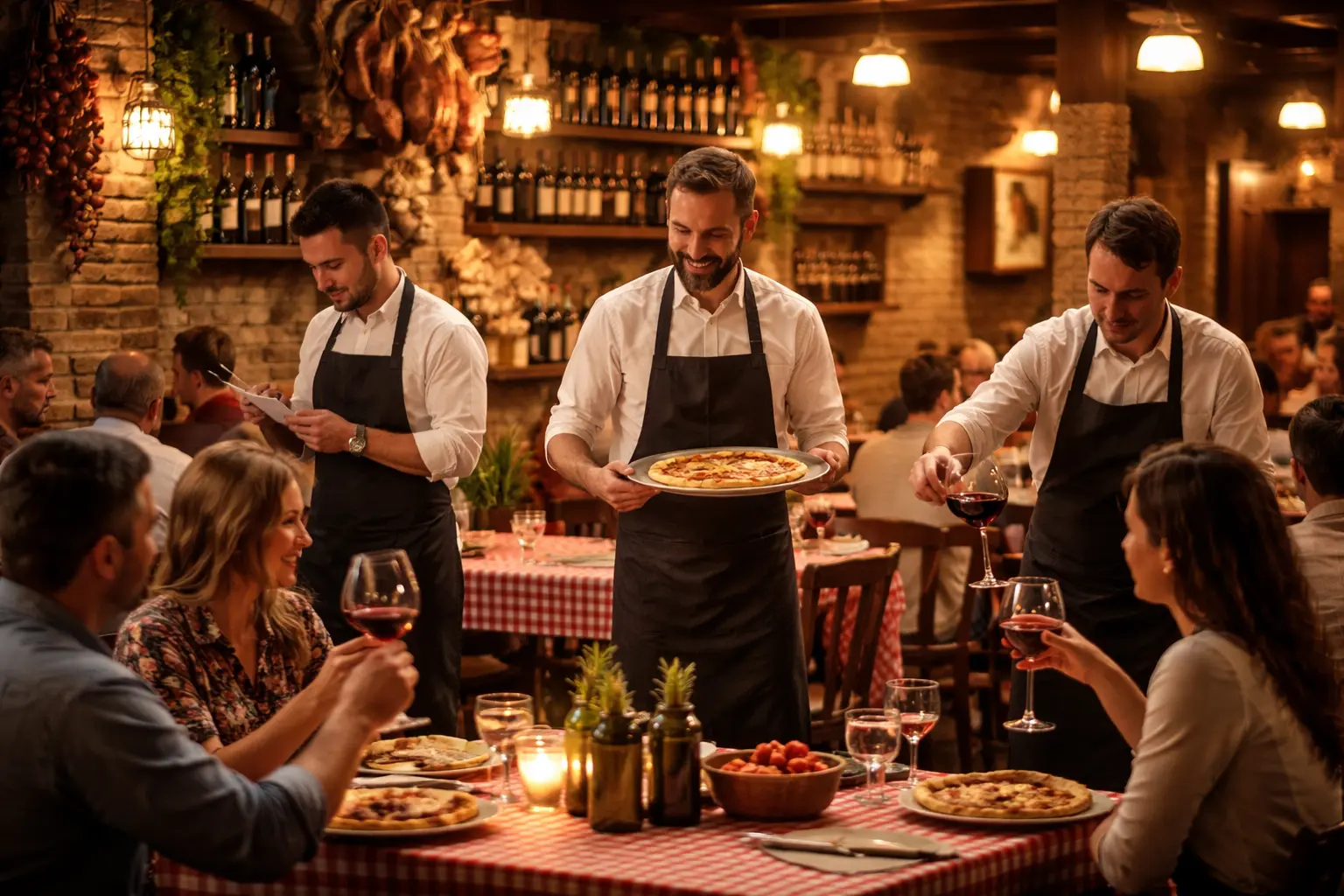
The dining room should feel warm and lived-in rather than sterile or cluttered with generic Italian clichés. That warmth ties directly into how guests perceive authenticity, which is why ambiance and hospitality go hand in hand.
Pacing rounds out the experience because Italian meals unfold slowly, giving time between courses for conversation and digestion.
How to Spot an Italian Dining Experience Worth Returning To
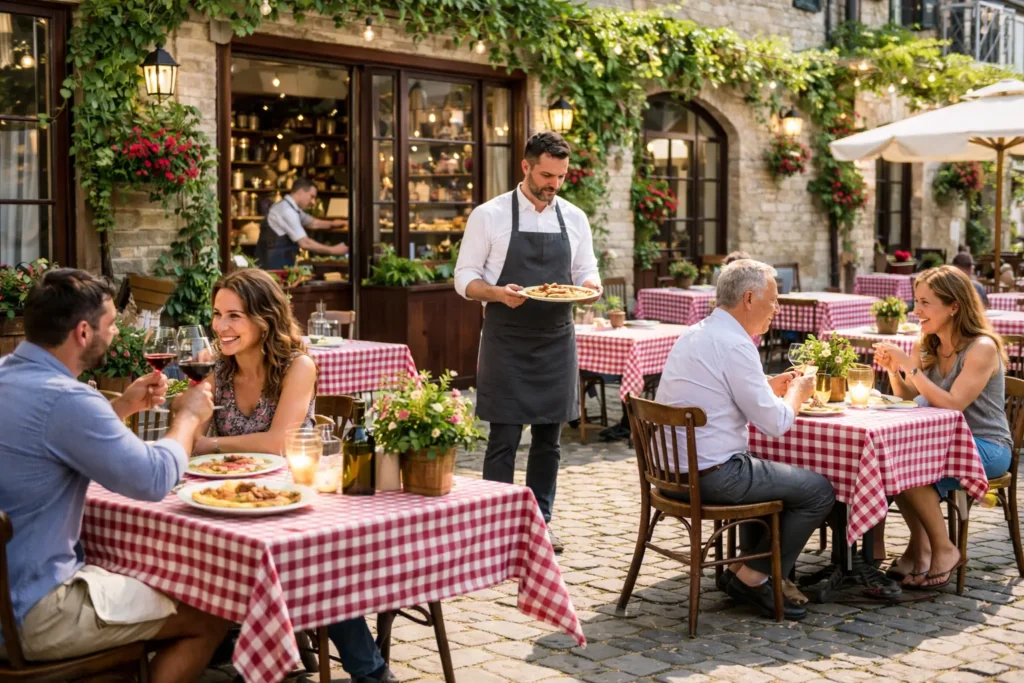
Knowing what to look for saves you from disappointing meals and helps you find restaurants worth visiting again. Fortunately, a good Italian dining experience reveals itself through small details, and most of them are easy to spot once you know where to look.
- Handwritten Specials and Smaller Menus: Restaurants that change dishes based on ingredient availability show they care about freshness over convenience. This tighter approach usually means the kitchen does fewer things but does them well.
- Staff Interaction with Regulars: Watch how servers greet returning guests because genuine hospitality shows in those moments. Integrity and understanding of tradition come through when staff treat dining as a relationship rather than a transaction.
- Fresh Bread and Real Olive Oil: Frankly, these two items tell you everything you need to know. If the bread arrives warm and the olive oil tastes grassy rather than flat, trust your instincts and stay.
These small signs add up quickly, and they show how much thought goes into every part of the meal.
Your Next Meal Should Feel Like a Trip to Italy
When was the last time a meal made you slow down, lean back, and forget about everything outside the room? That feeling is what authentic Italian dining delivers when all the pieces come together.
The best meals leave you satisfied but curious, already wondering what to order on your next visit. Look for restaurants that care about tradition, seasonal ingredients, and genuine hospitality rather than flashy gimmicks or passing trends.
When you find a place like that, you’ll understand why food connects people so deeply. That’s also what we aim for at Fiore, and our kitchen is always ready to serve the freshest meals.
Warning: Undefined variable $tax_query in /sites/fiorerestaurant.net/files/wp-content/plugins/advanced-recent-posts/includes/class.widget.small.thumbnails.php on line 123
Recent posts