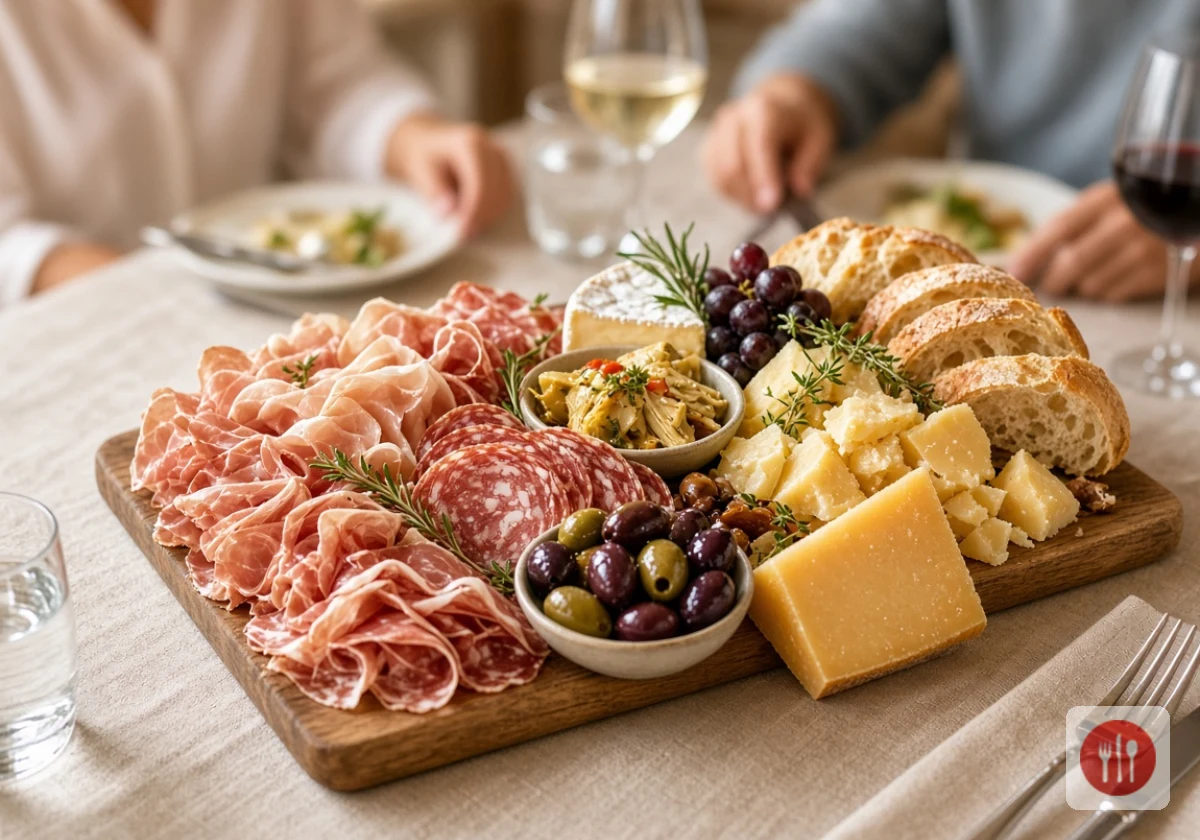
An Italian antipasto board works best when every item has room to be seen and picked up. Plus, a smaller selection lets guests see each cheese, cured meat, and vegetable clearly and reach their choice without moving other food aside.
Yet leaving space on the board can feel ungenerous when you’re used to filling every gap for your guests. At Fiore Restaurant, we treat antipasto as the Italian appetizer that opens a meal, so it should wake up the appetite rather than fill everyone up.
This guide covers which antipasto ingredients to buy, how much to plan per guest, and how to arrange them. You’ll also find the habits that crowd a board and how to fix each, starting with the shopping list.
What Ingredients Go on an Italian Antipasto Board?
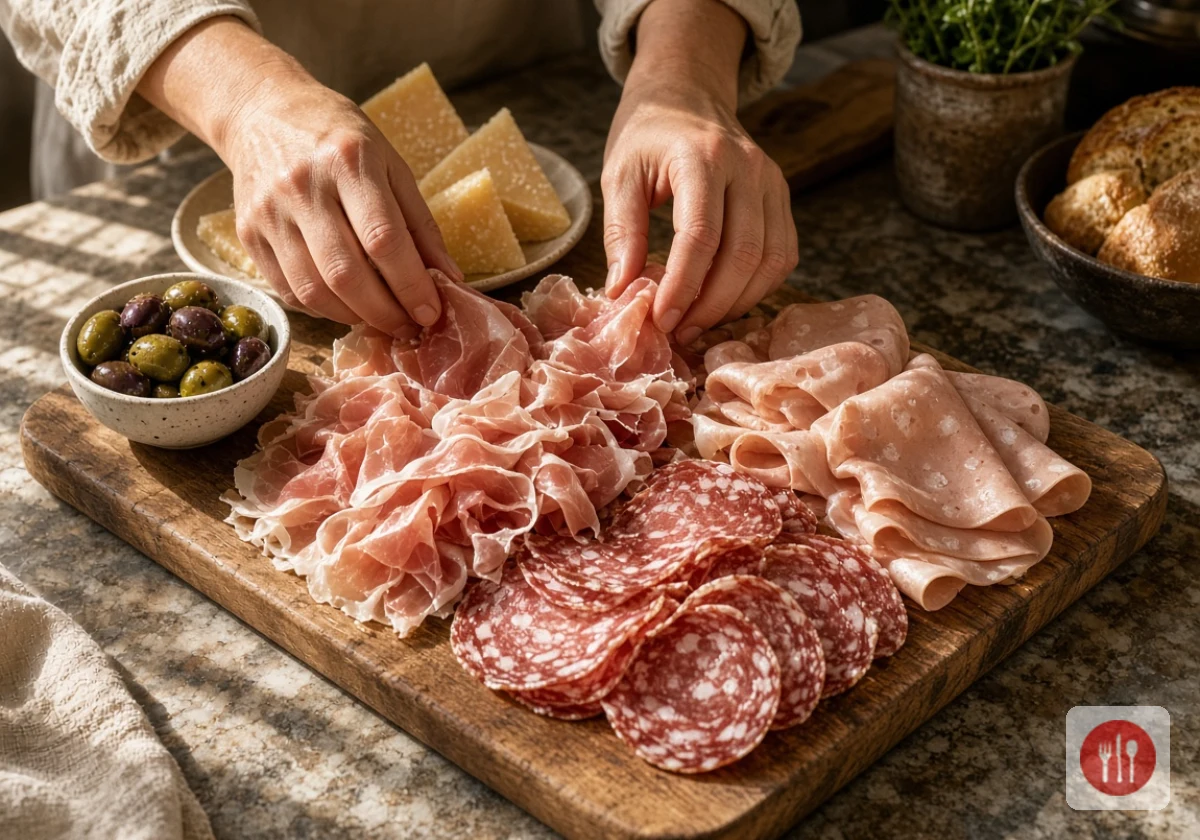
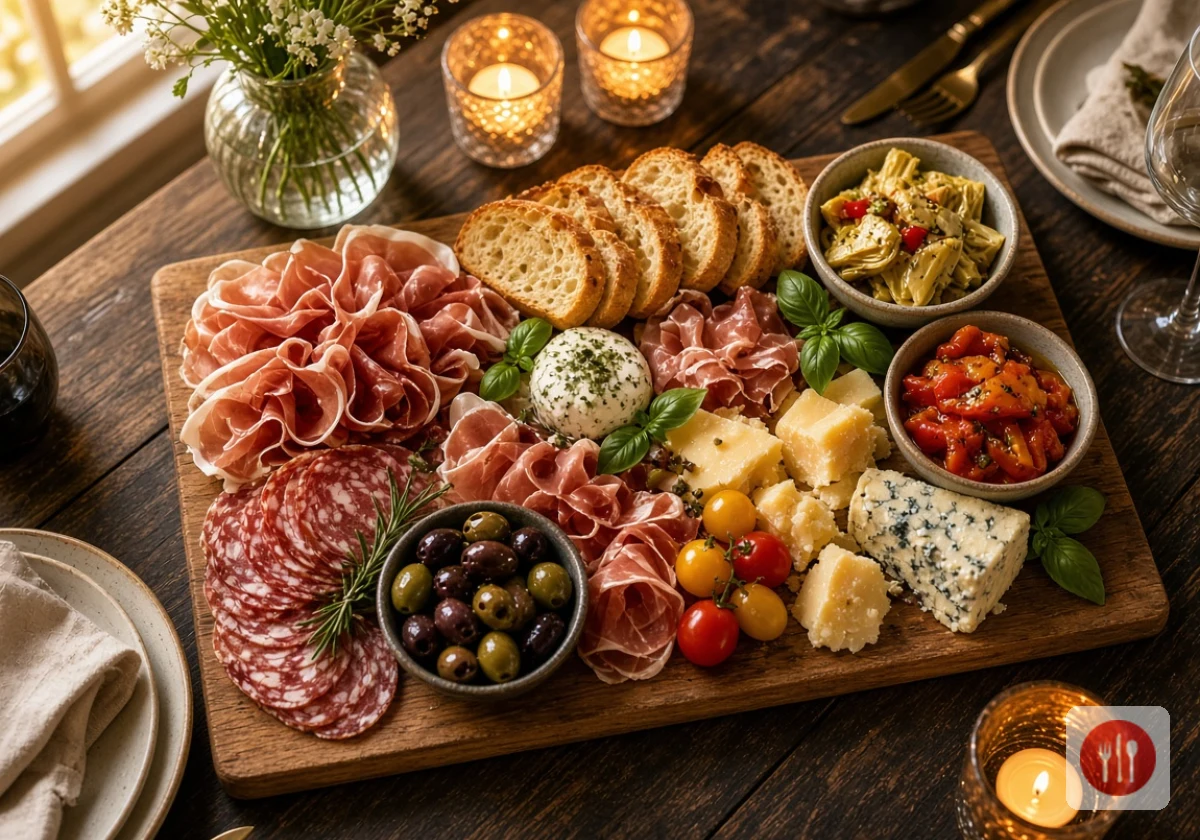
A classic Italian antipasto board holds five groups: cured meats, firm cheeses, marinated vegetables, bread, and a few finishing touches. Choose a few favourites across these groups, then adjust the selection to your board size and guest count. And for hands-on practice, our Antipasto, Zuppa, Salsa e Pane course covers this first course of the meal in the kitchen.
Below, we’ve explained what belongs in each group and how to choose well.
Cured Italian Meats: Prosciutto, Salami, and Mortadella
Prosciutto, Salami, and Mortadella are popular cured Italian meats. They give you three textures from one tray of Italian meats: silky, chewy, and soft. Because those three already balance salty, peppery, and mild flavors, add spicy Italian sausage or soppressata (only if your guests enjoy heat).
Either way, ask the deli to slice prosciutto paper-thin. Thick slices turn tough to tear once they warm up.
Italian Cheeses That Hold Their Shape at Room Temperature
Firm Italian cheeses like Parmigiano Reggiano, aged Provolone, and Pecorino keep clean edges as they warm. However, soft cheese still has a place in a small bowl, where mini Mozzarella can’t leak liquid into the bread.
So, choose one hard Italian cheese, one semi-firm, and one fresh. That trio covers nutty, mild, and creamy flavors in just three spots.
Olives, Artichoke Hearts, Roasted Red Peppers, and Sundried Tomatoes
Jarred olives, artichoke hearts, roasted red peppers, and sun-dried tomatoes add the acid and color that cut through rich meat and cheese. Drain them well before plating, though, because brine runs across the board and softens nearby crackers (a paper towel under the colander catches the drips).
And for a little heat, add stuffed cherry peppers in their own small dish. Their bright red rounds also break up the browns of the meats.
Sliced Ciabatta, Focaccia, and Breadsticks for Scooping
Bread gives guests an easy way to scoop up dips and a sturdy base for stacking meat. For example, sliced ciabatta holds toppings, focaccia carries olive oil and herbs, and breadsticks add crunch and height.
In practice, two bread options give guests variety without taking up too much space on the board. And if ciabatta is one of your choices, slice it on an angle just before serving to provide a wider surface for toppings.
Finishing Touches: Olive Oil, Balsamic Vinegar, Fresh Basil, and Figs
Small additions tie the board together without taking much room. Good olive oil, aged balsamic vinegar, and fresh basil add aroma, while figs balance salty prosciutto with sweetness (honey does the same beside sharp pecorino).
Always keep the oil and vinegar in small dipping dishes next to the bread. That way, guests dip as they go, and the meats stay dry.
Portion Math: How Much Antipasto to Buy for Each Guest
Once you’ve settled the ingredient list, use your guest count to work out how much to buy.
Generally, portions depend on the platter’s role in the meal. Guests need smaller servings before dinner and larger ones when antipasto is the main food on offer.
The table below gives per-person starting points for each group, along with what each amount means when you shop:
| Item | Before a Dinner | As the Main Meal | What It Means for Your Shopping |
|---|---|---|---|
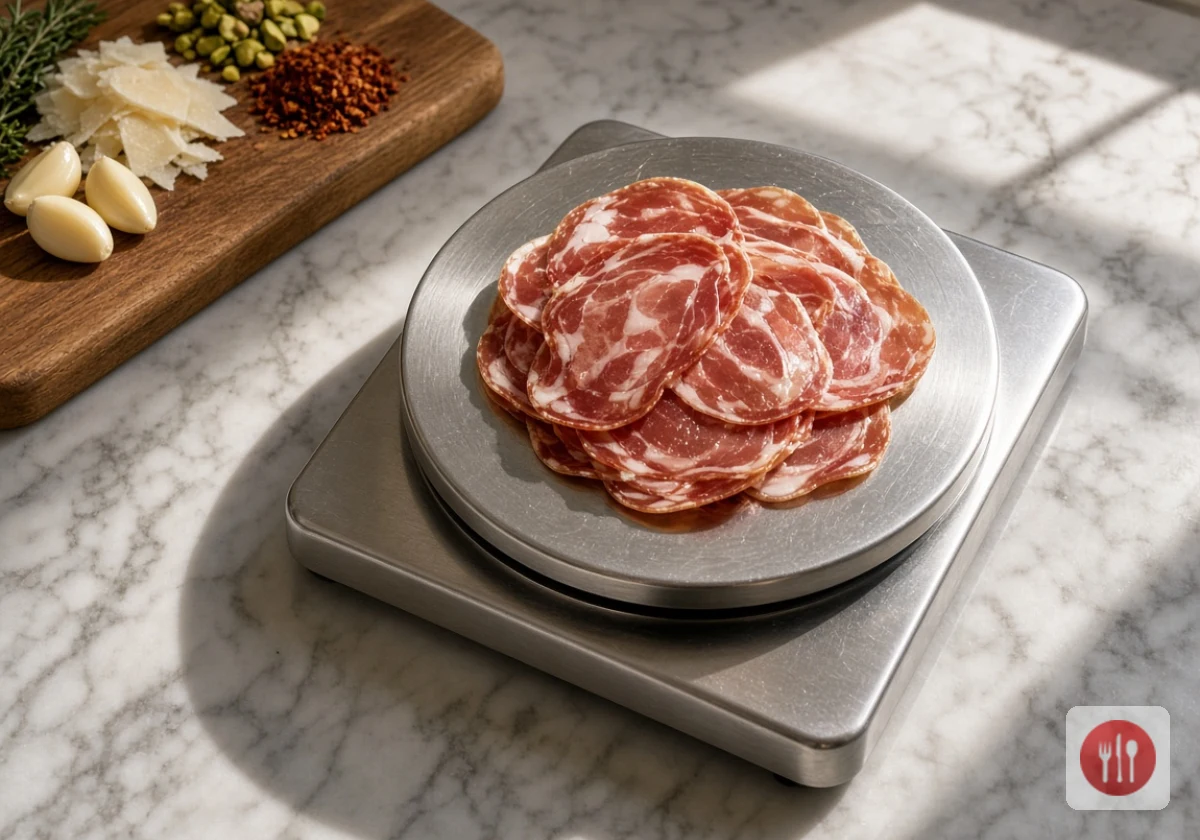
| Cured Italian meats | 2 oz | 4 oz | For eight guests before dinner, 1 lb total is enough |
| Italian cheese | 1.5 to 2 oz | 3 to 4 oz | Buy wedges and cut more only when a section runs low |
| Olives and marinated vegetables | 1/4 cup | 1/2 cup | Mix two or three small jars instead of one large one |
| Bread and crackers | 2 to 3 pieces | 4 to 5 pieces | Slice half the loaf first and refill from the kitchen |
The meat row deserves the most attention, because cured meat is often the priciest item and the easiest to overbuy. Feeding 12 or more people? Build two smaller boards so guests at both ends of the table can reach everything.
Arranging the Board So Every Item Has Breathing Room
The layout decides how the board looks and how easily guests serve themselves. Placing the large items first and filling in around them keeps each group visible, so nothing ends up buried under a pile of meat.
Work through the four steps below in order, starting with the pieces that anchor everything else.
Set Down the Bowls and Cheese Anchors Before Anything Else
Start with the small bowls for olives, mini mozzarella, and dips, because they can’t move once food surrounds them. Space three of them in a loose triangle, then place each cheese wedge in a different area with a few slices cut and the rest left whole.
That spread gives guests several starting points around the board. When we plate antipasto for a table, we always check that someone can reach a cheese from each side (a small kindness that guests notice at crowded parties).
Fold and Fan the Meats Instead of Laying Them Flat
Naturally, flat meat slices cover a lot of board and stick together as they sit, while folded ones take less space and are easy to grab. That’s why you should ruffle prosciutto into loose ribbons, fold salami into halves or quarters, and fold mortadella twice into a tidy triangle.
After that, run each meat in a curving line between the cheeses. These separate rows help guests identify each variety and take a slice without disturbing the rest.
Fill the Gaps With Mozzarella Balls, Olives, and Cherry Tomatoes
Once the bowls, cheeses and meats are in place, use cherry tomatoes and a few basil leaves to fill gaps. Use them sparingly, though, and leave a thumb’s width of bare board between groups (space is as much a part of the design).
We’ve found the board that looks a little sparse before guests arrive usually looks right once people start eating. Before filling those gaps, check that guests have room to reach each item. A few basil leaves or fig wedges can add colour to a bare corner without crowding the food.
Keep Bread and Crackers on a Separate Plate Beside the Board
Bread and crackers can crowd the cheeses and cured meats, so give them their own plate beside the board. This arrangement also keeps crackers away from moisture in marinated vegetables and soft cheeses, which can soften them.
Plus, place the bread plate within guests’ reach, with olive oil and balsamic vinegar close by. When supplies run low, you can refill it without moving the other ingredients.
The Habits That Overcrowd an Italian Antipasto Platter
Even with a careful layout, a few common habits can undo the spacing you planned. Most come from wanting the antipasti platter to look abundant the moment guests walk in.
The following four habits explain how this happens and what to adjust before guests arrive.
- Putting Everything Out at Once: Setting out the whole amount crowds the board and leaves perishable items at room temperature longer. The CDC guidance says never to leave perishable items out more than 2 hours, or 1 hour above 90°F. So hold back half of each item in the fridge and refill as sections empty.
- Borrowing From Every Board Style: Grapes, cheddar, and chocolate often sneak in from a standard charcuterie board or grazing platter, and each one claims space an Italian ingredient could use. A selection of Italian items also tastes more connected when the flavors share a region, so leave out anything outside the Italian pantry.
- Slicing All the Cheese Ahead: Slicing an entire cheese wedge takes up extra board space and exposes more surfaces to drying. That’s why you should slice a few pieces first to show the texture, then leave a knife beside the wedge.
- Pouring Wet Items Straight Onto Wood: Olives and marinated peppers leak oil and brine that spreads into neighboring cheese within the hour. Put every wet ingredient in a small bowl, even if the bowls take up a little more room.
Before guests arrive, check that they can reach each ingredient without moving another item. If access feels awkward, remove a portion and keep it ready for refills.
Build Your Antipasto Board for Your Next Gathering
A great Italian antipasto board depends on space more than quantity. When each meat, cheese, and vegetable has its own spot, guests see everything and serve themselves easily.
Start with a short shopping list from the portion table and arrange it in the four-step order. Then pour a glass of pinot noir and let your friends and family dig in while you refill from the kitchen.
Ready to cook Italian food with more confidence? Contact Fiore Restaurant for cooking classes and ideas for your next gathering.