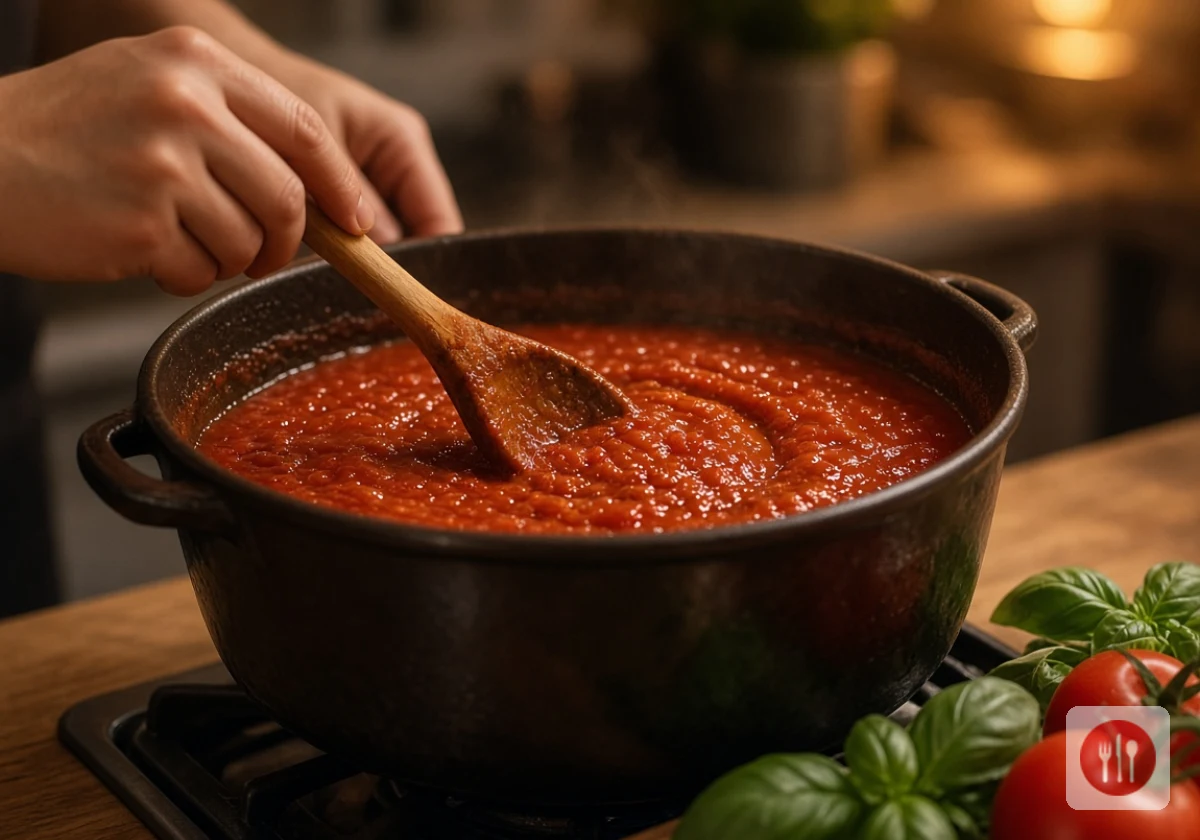
When a sauce goes wrong, you can almost always save it without dumping the pot. Too much salt, sharp acidity, and a watery texture each have their own cause. Thankfully, they all have matching fixes.
At Fiore Restaurant, we teach home cooks to taste a sauce and work out the problem before they reach for random add-ins. It’s a simple habit that will save your dinner. Not to mention, it keeps you from making the problem worse.
And we’ll share all the secrets with you in this guide. We’ll cover:
- Four ways to pull back a too-salty sauce
- Gentle ways to calm sour tomatoes
- A quick thickening table
- The prep habits that prevent all three mistakes
Let’s start with the salt.
How Do You Fix Salty Pasta Sauce Without Starting Over?

You can fix salty pasta sauce by shrinking salt’s share of the pot, either with more unsalted volume or with fat and acid that balance it. Salt can’t come back out once it dissolves, so every method that works has to go around that. Below, we’ve explained four methods, starting with the most reliable one.
1. Dilute With Water, Unsalted Tomatoes, or a Fresh Batch of Base
Dilution is the most dependable cure because it spreads the same salt across more sauce. Stir in unsalted crushed tomatoes or a splash of water, simmer, and taste after every addition (start with half a cup at most per round).
If too much salt went in early, cook a fresh unsalted base and blend the two batches. You can freeze the leftover sauce for another meal.
2. Skip the Raw Potato and Add Plain Water Instead
A raw potato absorbs some salty liquid, but it doesn’t pull salt out of the sauce on its own. The liquid left in the pot keeps roughly the same salt concentration. People who swear by the trick usually add water at the same time, and that water does the diluting.
But the thing is, adding plain water gives you the same result without the potato. You’ll even save time and keep loose starch from clouding your sauce.
3. Balance the Salt With Cream, Butter, or a Squeeze of Lemon
Fat and acid don’t remove salt, but they change how your tongue reads it. For instance, cream and butter add richness, while lemon adds brightness that pulls focus away from the salt.
In our cooking courses, we reach for unsalted butter first, because it rounds out a tomato sauce without changing its character. That said, lemon works best on lighter, oil-based sauces, so add a little at a time and taste before you add more.
4. Stretch the Whole Dish With Extra Pasta or Vegetables
When the sauce is almost good enough but still tastes salty, change the ratio on the plate. Toss it with extra pasta so each strand carries less sauce. You can also add sautéed zucchini, spinach, or mushrooms, which soak up sauce without adding any salt.
Since we want to avoid adding more salt, leave the pasta water unsalted for this batch (just this once, your noodles will still taste fine). That way, the extra pasta won’t make an already salty meal worse.
Too Sour Tomato Sauce: Ways to Reduce Acidity Without Losing Flavor
With the salt under control, acidity is the next complaint home cooks bring to us. Tomatoes vary from can to can, and a sharp batch can make the whole pot taste thin and sour. You’ve probably tasted a spaghetti sauce that bit the back of your throat, and sugar is the usual first reach for that.
Yet sugar only hides the sharpness, and too much leaves marinara sauce tasting sweet and flat. That’s why we try gentler options first, ones that neutralize the acid or add body.
Try these fixes one at a time, tasting between each:
- Baking Soda: Add a tiny pinch to neutralize some of the acid. The sauce will fizz briefly as it reacts. Let the fizz settle, stir well, and taste before deciding if it needs another pinch. Keep in mind that too much baking soda leaves the sauce tasting flat and slightly soapy.
- Grated Carrot: One finely grated carrot brings natural sweetness as it simmers and softens into the sauce. It also adds a little body when the tomato sauce is too thin.
- Butter or Olive Oil: For a richer finish, a pat of unsalted butter helps soften the sharp edges. A drizzle of olive oil offers a similar effect while keeping the flavour closer to a traditional tomato sauce.
- Cream: Add a spoonful when you’re happy for the sauce to head toward a rosé style. Stir it in over low heat so it blends evenly, and avoid boiling the sauce hard after adding it.
- Sugar: When the other options fall short, a small pinch may balance the remaining sourness. Too much will cover the tomato’s natural tang, so taste again once the sugar dissolves.
Before making another adjustment, taste the sauce with a piece of plain pasta. The starch can soften how sharp the tomatoes taste. That should give you a clearer idea of how the finished dish will turn out.
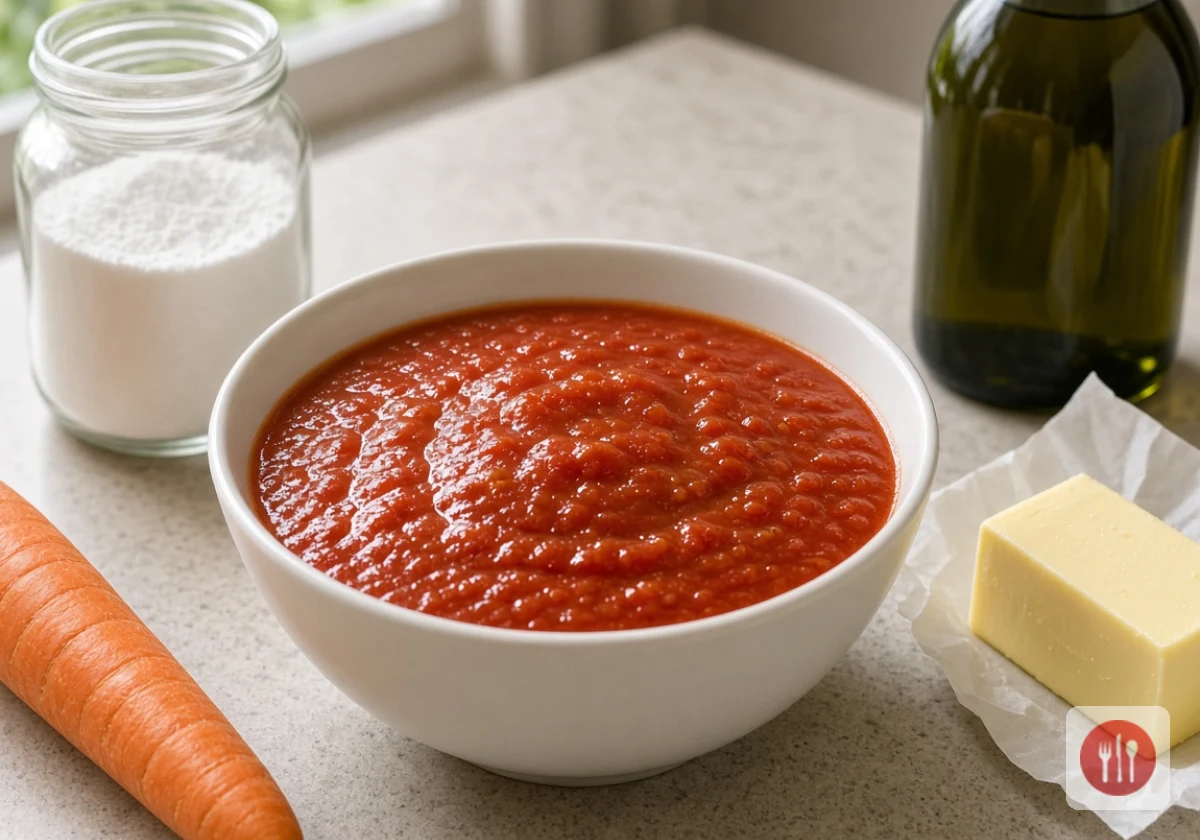
Thickening a Thin Italian Sauce on the Stove
A watery sauce slides off pasta and pools at the bottom of the bowl. Here’s the thing: the best way to thicken Italian sauce depends on how much time you have before dinner. Short on time or not, the options below show what each method does to your sauce.
| Method | How It Works | Best For |
|---|---|---|
| Simmer uncovered | Steam carries off extra water | Any sauce when you have time to spare |
| Tomato paste | Adds concentrated tomato solids | Thin marinara that also tastes weak |
| Starchy pasta water | Starch helps the sauce cling to noodles | Finishing pasta in the pan |
| Grated Parmesan | Melted cheese adds body | Cream or butter sauces that need salt |
For most tomato sauces, start by simmering uncovered. It reduces excess liquid without adding ingredients that could change the flavour. Stir occasionally to prevent sticking, especially as the sauce thickens. If you’re short on time, tomato paste offers another option, although it will make the tomato flavour stronger.
Quick Tip: Before serving, drag a spoon through the sauce and watch how quickly the gap closes. A thick sauce should flow back slowly rather than rush into place. You can also test a spoonful on pasta to see if it coats the surface evenly.
Italian Sauce Troubleshooting Starts Before the Pot Gets Hot
Many sauce problems begin with early choices about salt, ingredients, and tomatoes (Italian sauce troubleshooting starts at the cutting board). Have a look at the four habits that follow.
Salt in Stages and Taste as You Go
Salt spreads more evenly when you add it in small amounts throughout cooking. Adding a pinch with the onions, another after the tomatoes, and a final check lets you catch the sauce while it’s still under-seasoned.
Remember that simmering concentrates salt as water cooks off, so hold back the last pinch until the sauce reaches the thickness you want. We suggest tasting with a clean spoon each time (double-dipping is how cooks lose track of seasoning).
Watch the Salty Ingredients Hiding in Your Recipes
Even careful seasoning won’t help if you overlook the salt already in your ingredients. For example, parmesan, pecorino, pancetta, anchovies, olives, capers, and canned tomatoes all add sodium before you pick up the shaker.
Those extras contribute to your daily intake under the FDA guidance on daily sodium intake. It sets the Daily Value (DV) at less than 2,300 mg for adults and children aged four and older.
To avoid oversalting, choose no-salt-added canned tomatoes and adjust the seasoning after adding the other ingredients.
Use the Right Tomatoes and Give Them Time
Ripe, sweet tomatoes bring less acidity and need fewer corrections later. Our guide to cooking with seasonal tomatoes explains when fresh or canned makes more sense.
Even with the right tomatoes, cooking time affects the final result. A slow, steady simmer softens raw sharpness and thickens the sauce without extra ingredients. In our kitchen, we’ve found that rushed cooking causes many sour, watery batches. So allow enough time for a gentle simmer before serving.
Log Each Winning Fix on a Pinterest Board
Once a fix works, record it so you can repeat it later if needed. A Pinterest board gives you somewhere to save those recipes alongside notes about the adjustments that worked. Say, pin the marinara that finally tasted balanced and note which tomatoes you used.
You could also organize saved recipes by problem, with separate boards for salt fixes and thickening tricks. That way, when a Mother’s Day dinner or Thanksgiving leftovers call for a quick sauce, you’ll have your notes ready.
Your Next Pot of Sauce Can Be Your Best One Yet
Salty, sour, or thin, a struggling sauce responds best when you match the fix to its cause. Dilution helps with excess salt, small adjustments balance acidity, and a gentle simmer thickens watery sauces.
And the next time you find yourself asking, “Why is my sauce so salty?”, taste it before adding anything else. Try one fix at a time and give the sauce a chance to respond before making another adjustment. Keep a note of what worked, including the ingredients and amounts you used, so you have a useful reference for your next batch.
Our hands-on Italian cooking classes give home cooks the chance to practise these techniques with guidance. Contact Fiore Restaurant to join a class and work on your sauce-making skills.