Italian food tastes different across every region because geography and climate pushed each area toward its own ingredients and methods. And those differences run centuries deep.
People often assume Italian food is one unified cuisine, the same dishes and flavors, just served in different cities (spoiler: it isn’t). This assumption leads to missed flavors, wrong ingredient swaps, and recipes that never taste the way they should.
Our instructors have cooked through dishes from across Italy’s 20 regions, and the variety still catches people off guard. This article walks through Italy’s regions, the ingredients that define them, and why every plate tastes the way it does. After reading this, you won’t look at Italian food the same way again.
Geography Is Why Regional Cuisine Varies So Dramatically
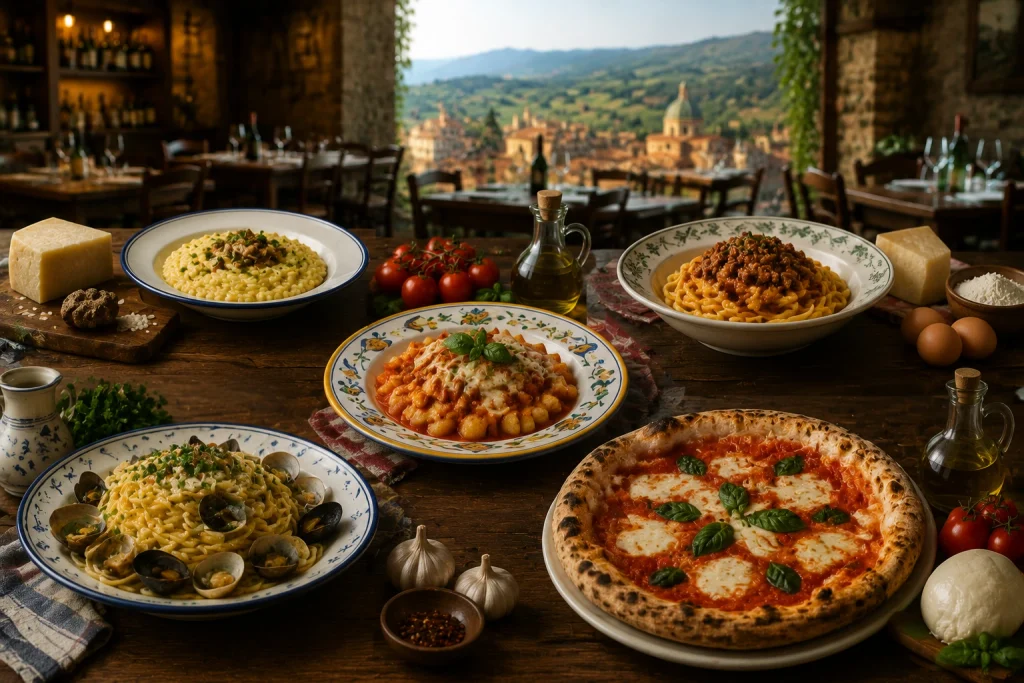
Italy stretches across 20 distinct regions, each defined by a different climate, terrain, and history. That geography heavily influenced how Italian cooks have fed their families for centuries. When regions develop in near-total isolation from each other, their food traditions have no reason to overlap.
Three geographic zones influence Italian food in ways that have never converged:
- Mountains Cut Off the North: The Alps and Apennines blocked trade routes for centuries, so northern communities cooked with whatever grew around them. Over time, those limitations became traditions.
- Plains Determined the Staples: Flat, fertile land in the Po Valley made wheat, rice, and dairy farming practical on a large scale. That’s why risotto and fresh pasta dominate northern Italian food. The land set the menu long before any cook did.
- Coastlines Fed the South: Wrap a region around the Mediterranean and the food follows naturally. Seafood, tomatoes, and citrus became daily staples because the sea and sun produced them in abundance.
Geography didn’t choose favorites. It simply handed each region a different set of tools, and cooks built their entire food culture around whatever those tools allowed.
The Ingredients and Italian Food Culture Behind Every Regional Dish
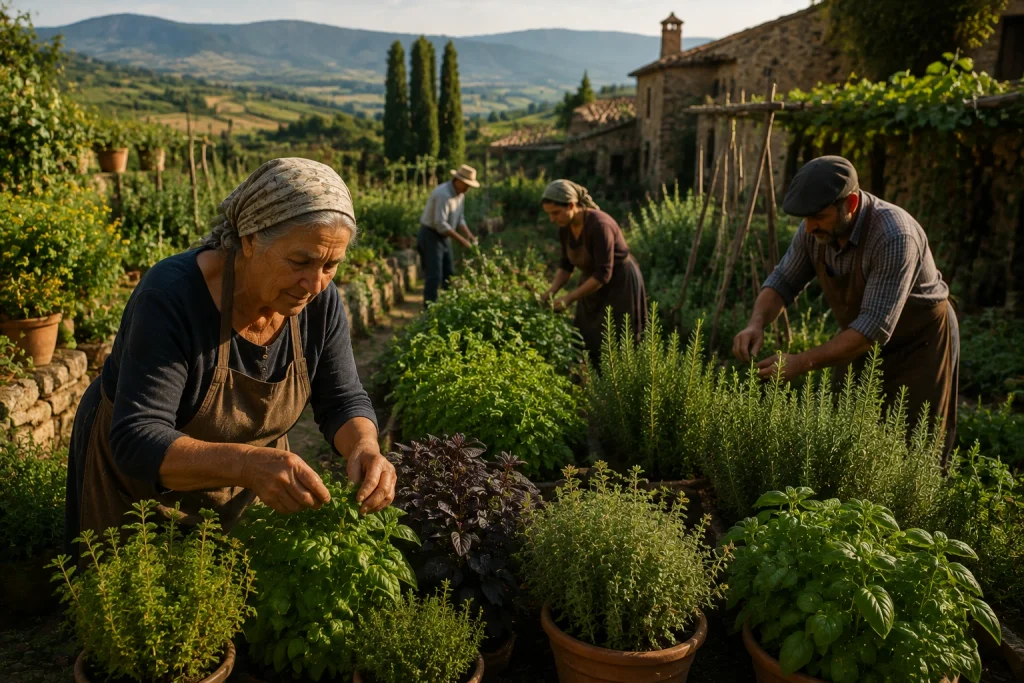
Their food culture has one rule that never changed: cook with what the land gives you. In fact, where other cultures borrowed and adapted freely, Italian regional cooking largely stayed put.
We’ve taken our instructors through recipes from every major Italian region, and the regional gaps never stop surprising people. The Accademia Italiana della Cucina has spent decades recording these regional differences and protecting the traditions behind them. This work reflects the same cultural values that led UNESCO to recognise Italian cuisine as a heritage tradition.
Walk into any of their regional kitchens, and you’ll see it firsthand. Local traditions drove pasta recipes and cooking techniques long before formal culinary training existed.
For example, an Italian chef in Tuscany reaches for pecorino romano and olive oil without a second thought (most of their cooks wouldn’t dare swap that). A cook in Bologna, on the other hand, goes straight for egg-based pasta dough. And in both cases, swapping those ingredients out would produce a completely different dish.
Northern Italy: Rich Fats, Rice, and Slow Braises
Northern Italy might surprise you. It produces some of the richest, most indulgent food in the entire country. The north doesn’t cook with olive oil the way the rest of Italy does. Butter, slow-cooked meats, and creamy rice dishes define the table up here instead.
Northern Italian food has a personality thanks to these three ingredients:
Risotto Over Pasta
As we already mentioned, rice grows abundantly across the Po Valley. And creamy dishes like risotto alla Milanese became the north’s answer to the dried pasta that dominates elsewhere. The grain practically wrote the region’s culinary identity. Try ordering spaghetti in Milan, and you’ll get a look that says everything.
Butter Instead of Olive Oil
Forget everything the Mediterranean diet tells you about olive oil.
In northern Italy, butter runs the kitchen. It goes into pasta sauces, risottos, and braises in ways that give the food a richness you can taste in the first bite. One region’s staple is another’s afterthought.
Slow Braises for Cold Winters
Cold winters pushed northern Italian cooks toward dishes that could simmer for hours without attention. Osso buco, braised veal shank cooked low and slow in white wine and broth, is the clearest example of that. You get a dish so tender the meat slides off the bone before you even pick up a fork.
Northern Italy’s food is built for cold weather and long evenings. Head to central Italy, and the cooking philosophy changes completely.
The Bold, Simple Flavors Central Italy Does Best
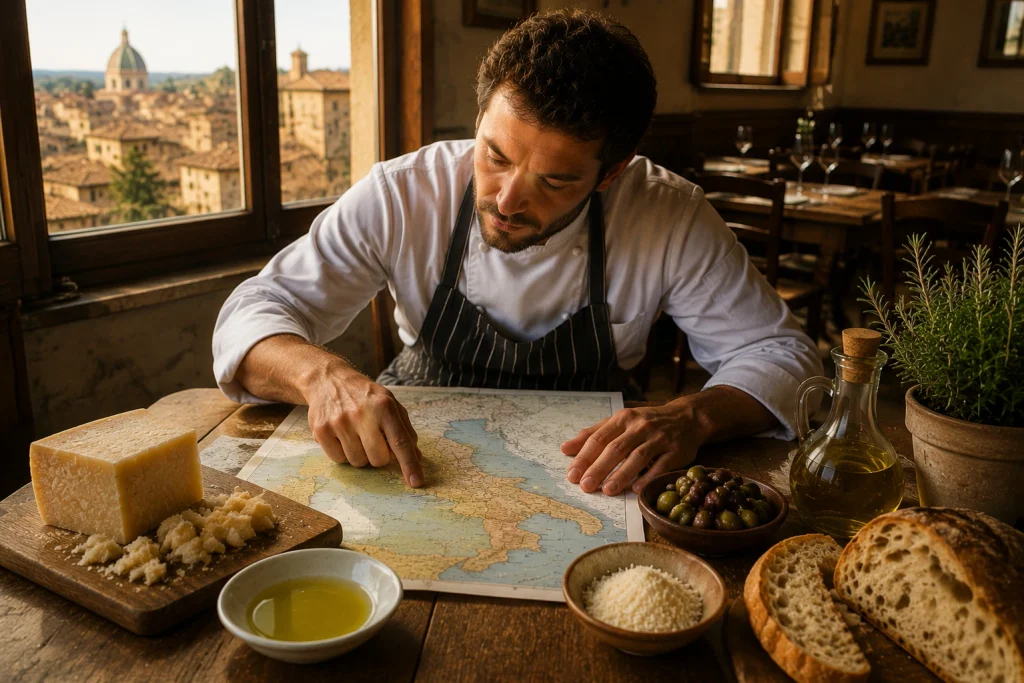
Central Italy has never needed a long ingredient list to impress anyone. Tuscany and Rome built some of Italy’s most recognized dishes on little more than good olive oil, aged cheese, and fresh bread. Less is genuinely more here, and the food proves it every single time.
Take a look at what central Italian cooking puts on the plate:
- Olive Oil Runs Everything: Central Italy produces some of the finest olive oil in the world, and the cooks there treat it as the main ingredient. A good Tuscan olive oil carries a peppery finish that supermarket bottles never deliver, and central cooks build entire recipes around that specific quality.
- Pecorino Romano Over Parmesan: Rome reaches for pecorino romano the way northern Italy reaches for butter. Plus, Pecorino goes into cacio e pepe and carbonara, giving those pasta sauces a sharp, salty depth that parmesan simply doesn’t have.
- Bread Soup as a Staple: Ribollita started as a way to stretch leftover bread and vegetables into a full meal. Tuscan cooks simmered everything together until it thickened into a deeply satisfying vegetable soup that has been on Tuscan tables for centuries.
What central Italy gets right is knowing which ingredients deserve the spotlight and giving them room to perform. Southern Italy operates on a completely different logic, built around heat, abundance, and bold flavors.
Southern Italy Runs on Tomato Sauce, Olive Oil, and Dried Pasta
The further south you go in Italy, the more the sun takes over the food. After cooking through recipes from all 20 regions, we’ve found that their cooking gets flattened into tomato sauce and dried pasta in most people’s minds. The actual range is wider.
To be specific, Southern Italian cooks rely on tomatoes, dried pasta, and olive oil the way northern cooks rely on butter and rice. Let’s see how.
Tomatoes and Heat
Southern Italy’s hot climate turned tomatoes into the region’s defining ingredient. Italian cooks slow-cook them into rich sauces, serve them fresh with olive oil, and pair them with chilli peppers and garlic.
For instance, mozzarella di bufala sits alongside those tomatoes so naturally that the combination became a southern signature all on its own.
Dried Pasta as a Daily Staple
Italian cooks rely on dried pasta across the south the way northern cooks rely on rice. And the reason comes down to climate. The hot, dry conditions made fresh pasta impractical, so dried pasta took over from Naples down to Sicily.
What came out of that necessity is a staple that holds its own with nothing more than tomato sauce and olive oil.
Seafood From the Mediterranean
Fresh fish and fried seafood feature on southern Italian tables the way meat dominates further north. Sicily in particular developed an identity almost entirely around what the Mediterranean provides. The ingredients reflect centuries of Mediterranean trade and influence.
Swordfish, sea urchin, and sardines all feature regularly in Sicilian cooking, ingredients that rarely appear on a northern Italian table.
Bottom Line: As you might have caught on, Southern Italy’s food is loud, bold, and unapologetic about it.
There’s a Whole Map of Italian Food Still Left to Explore
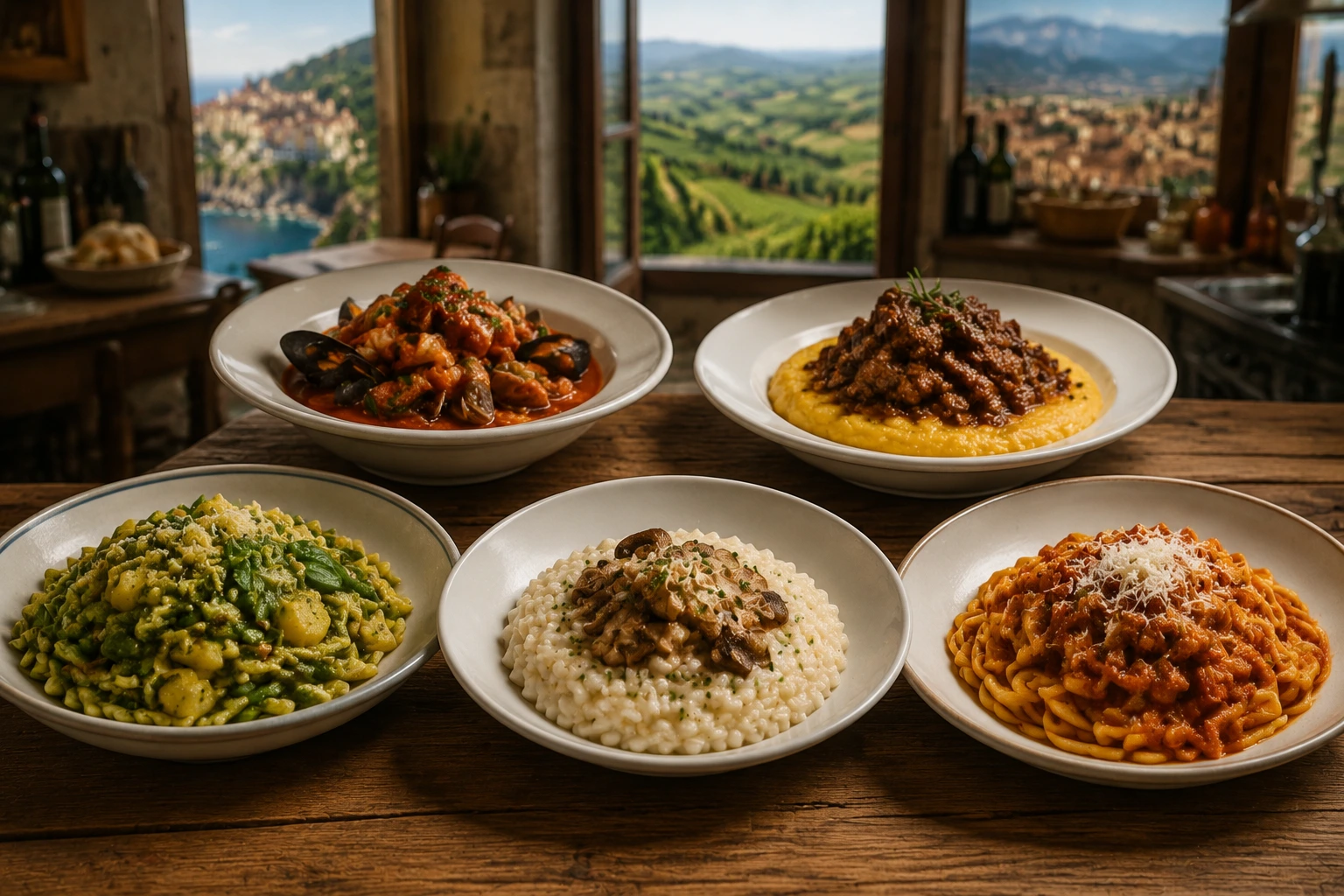
Italian food rewards curiosity. Every region carries centuries of distinct culinary tradition, and understanding those differences changes how you order, cook, and eat Italian food entirely. The depth is there. Most people just haven’t had a guide.
This guided you through Italy’s geographic split and the ingredients each region built its cooking around. The traditions that developed across the north, center, and south over centuries tell the rest of the story.
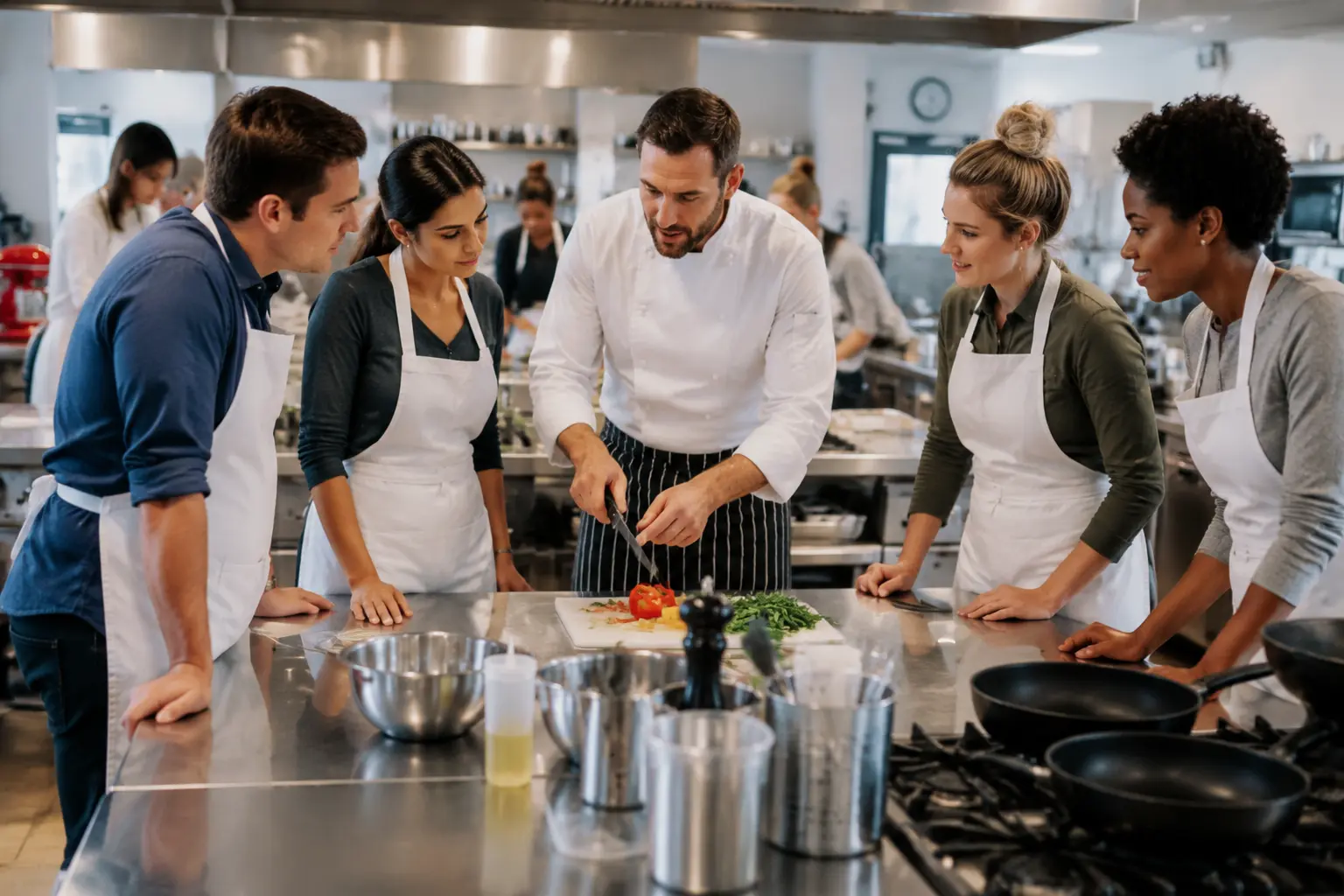
At Fiore Restaurant, our team walks you through every regional recipe, technique, and tradition until Italian cooking clicks. Real ingredients, real methods, and dishes that finally make sense on the plate.